



Concrete Driveway Replacement
Full concrete driveway replacement across the Charlotte metro — demo, haul-off, subgrade rework, base rebuild, and a fresh pour spec'd to your actual usage. Zero deposit, licensed and insured, mix design and joint plan on paper before the saw hits the old slab.
Get your free quote
We respond in less than 2 hours.
Recent Driveway Replacement Projects
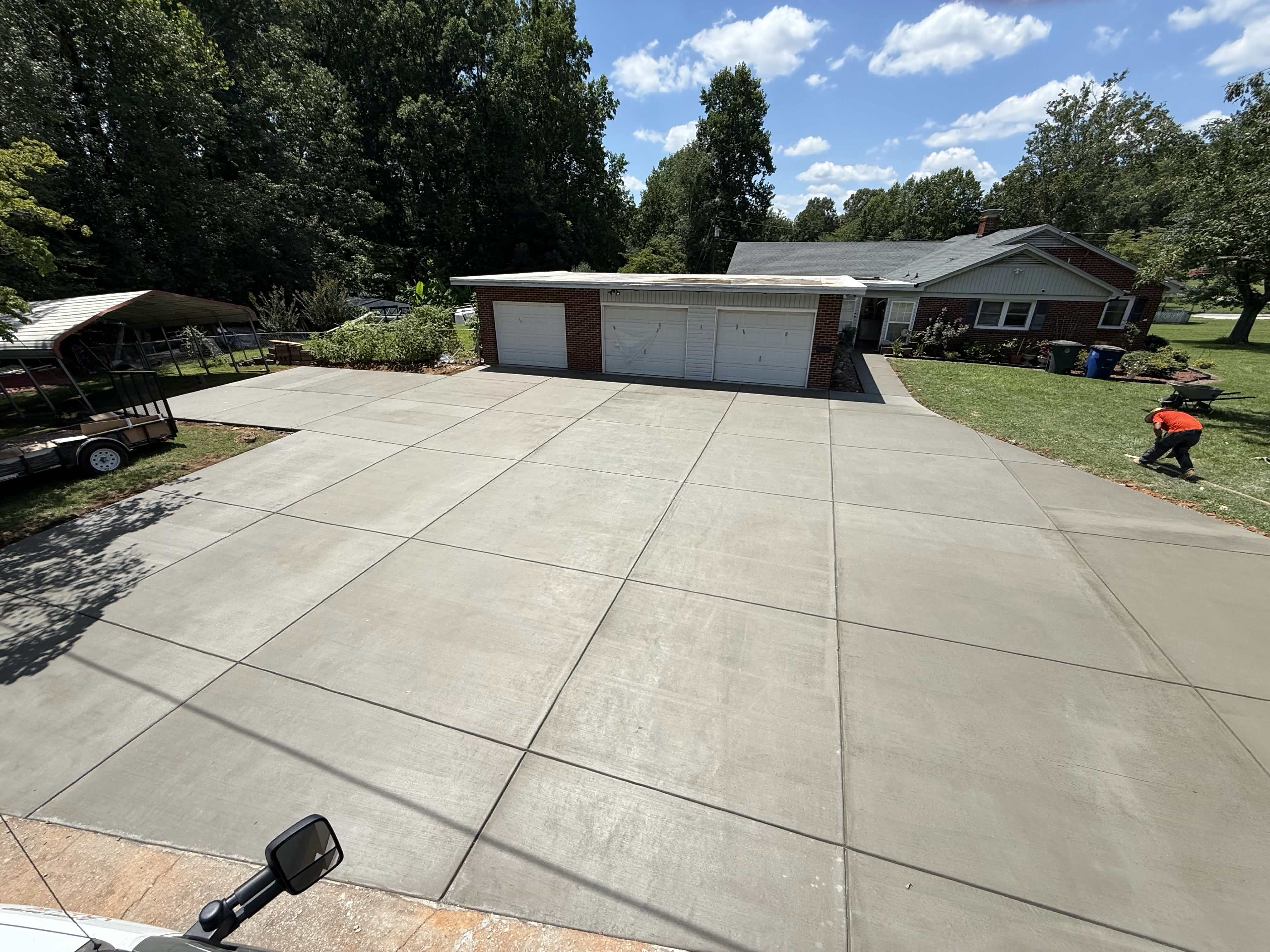
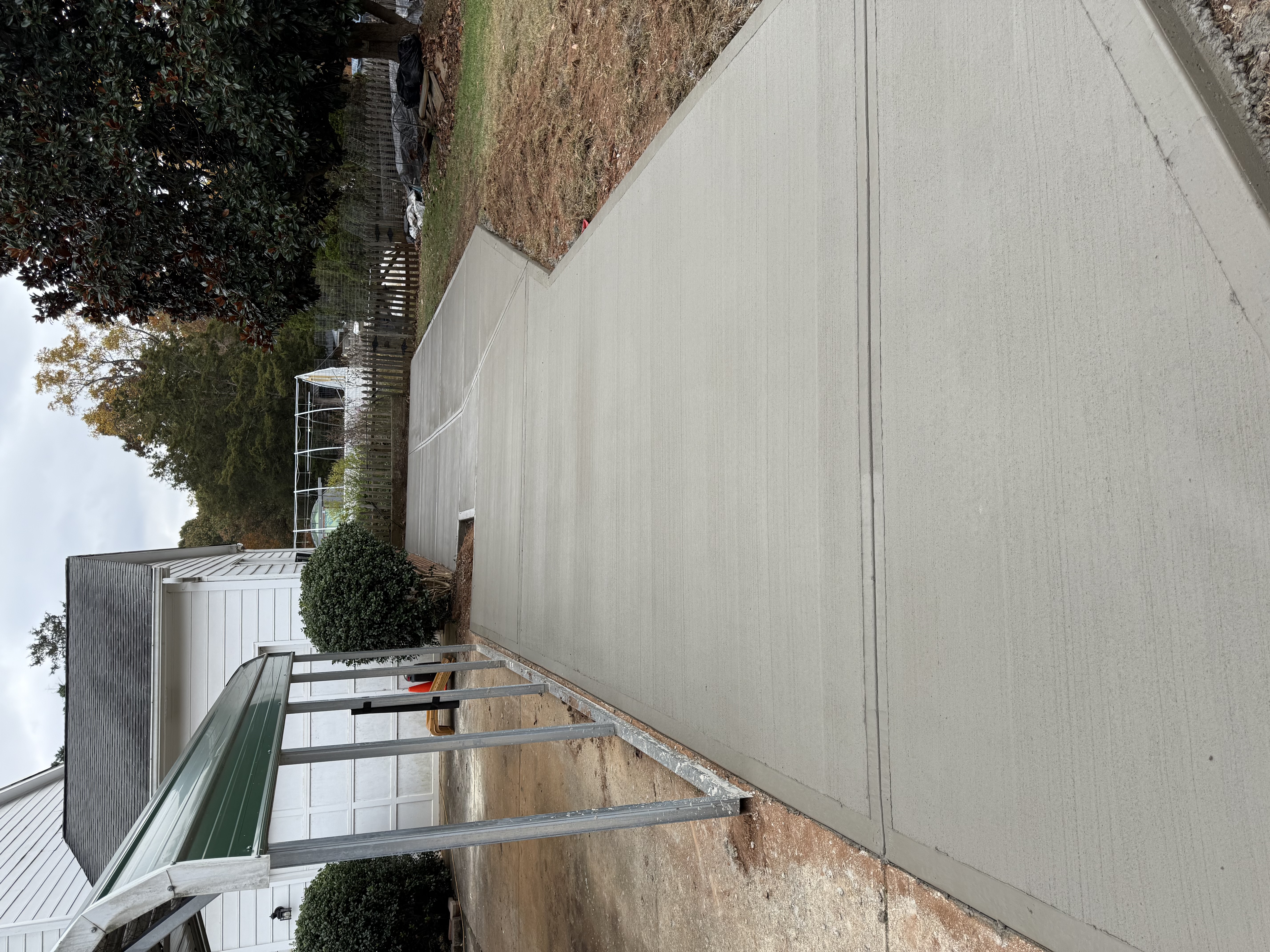
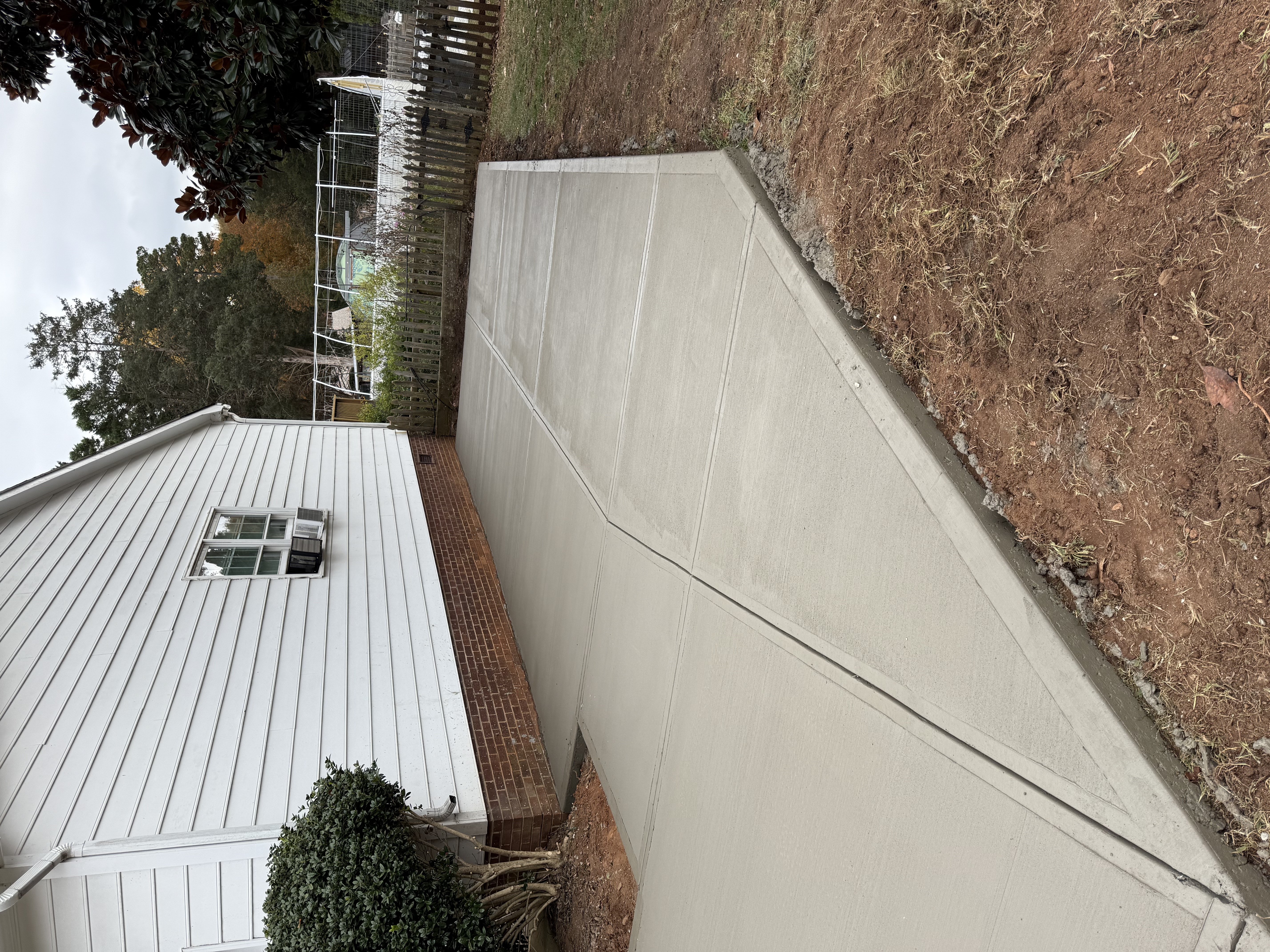
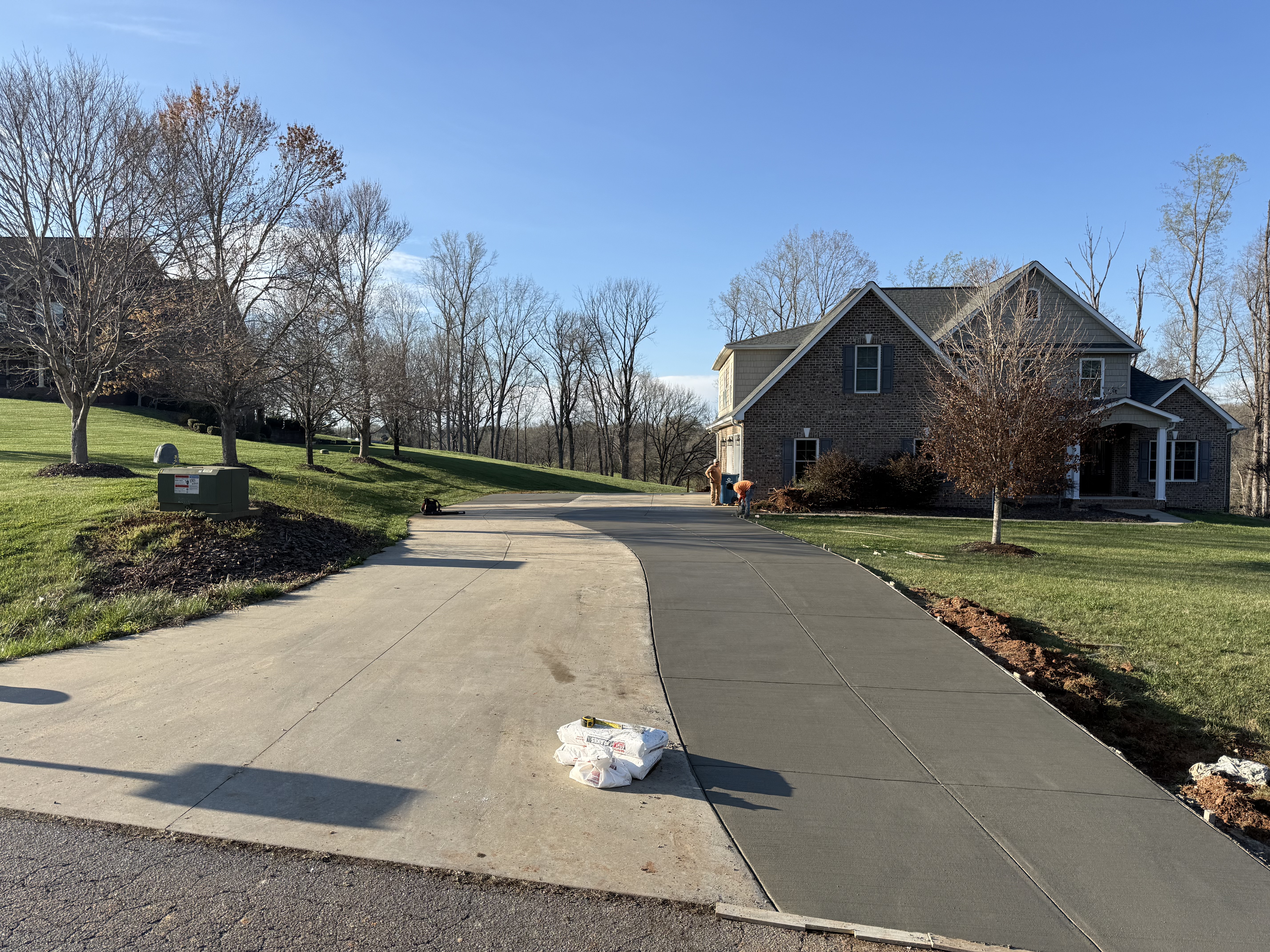
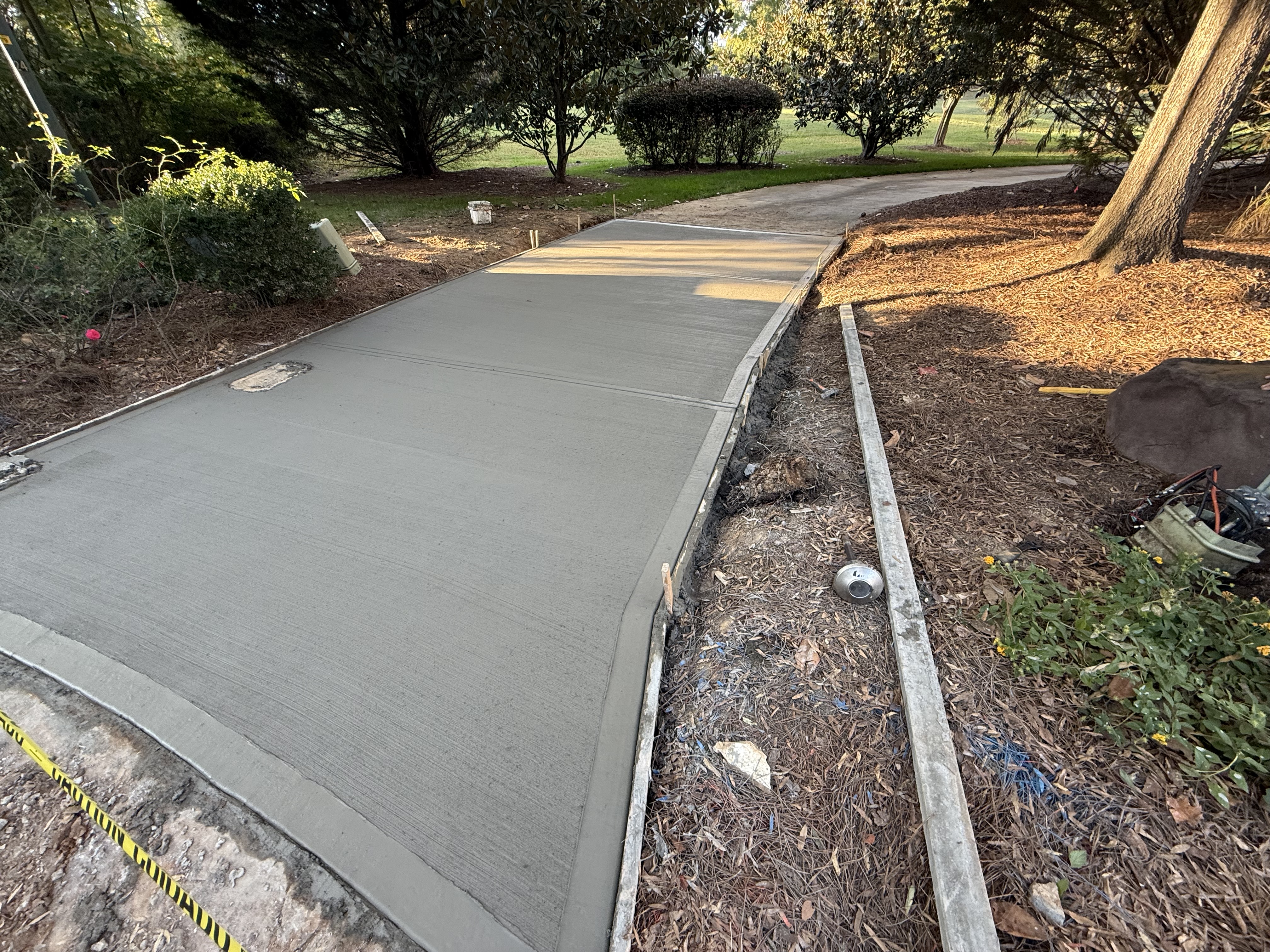
Real customer jobs we've poured. Swipe through and picture yours next.
Driveway Replacement
Recent Job
Driveway Replacement
Recent Job
Driveway Replacement
Recent Job
Driveway Replacement
Recent Job
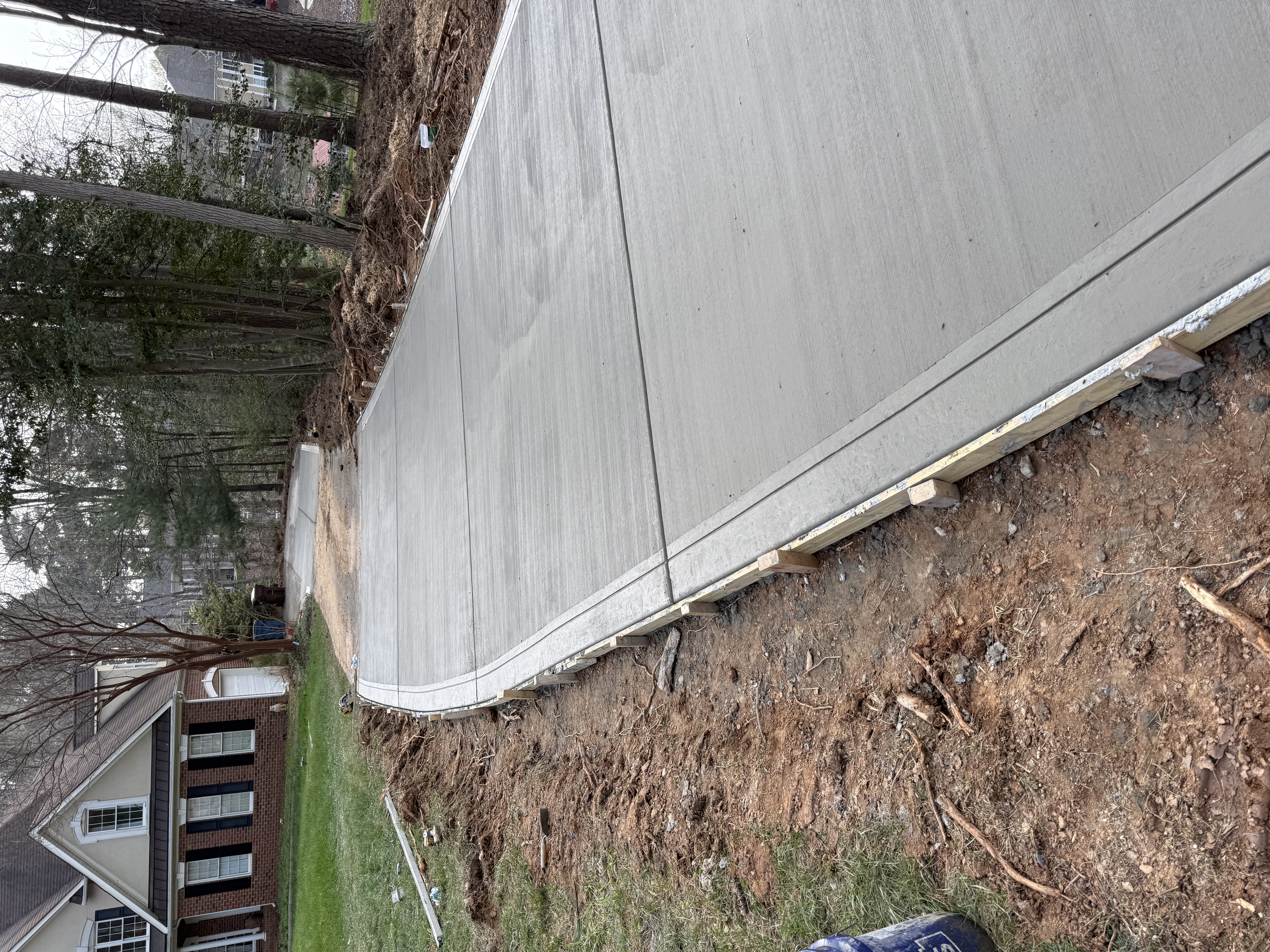
Driveway Replacement
Recent Job
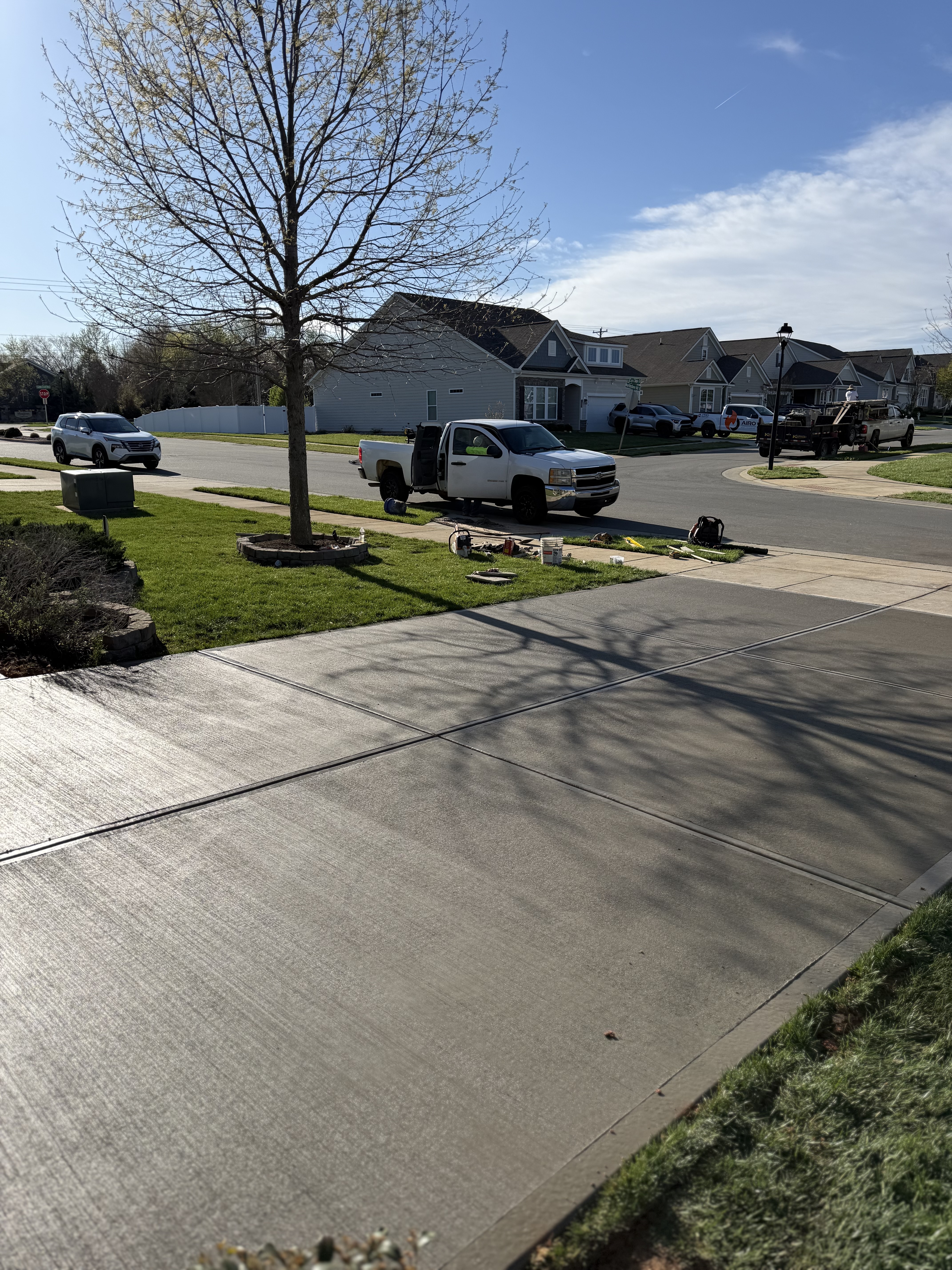
Driveway Replacement
Recent Job
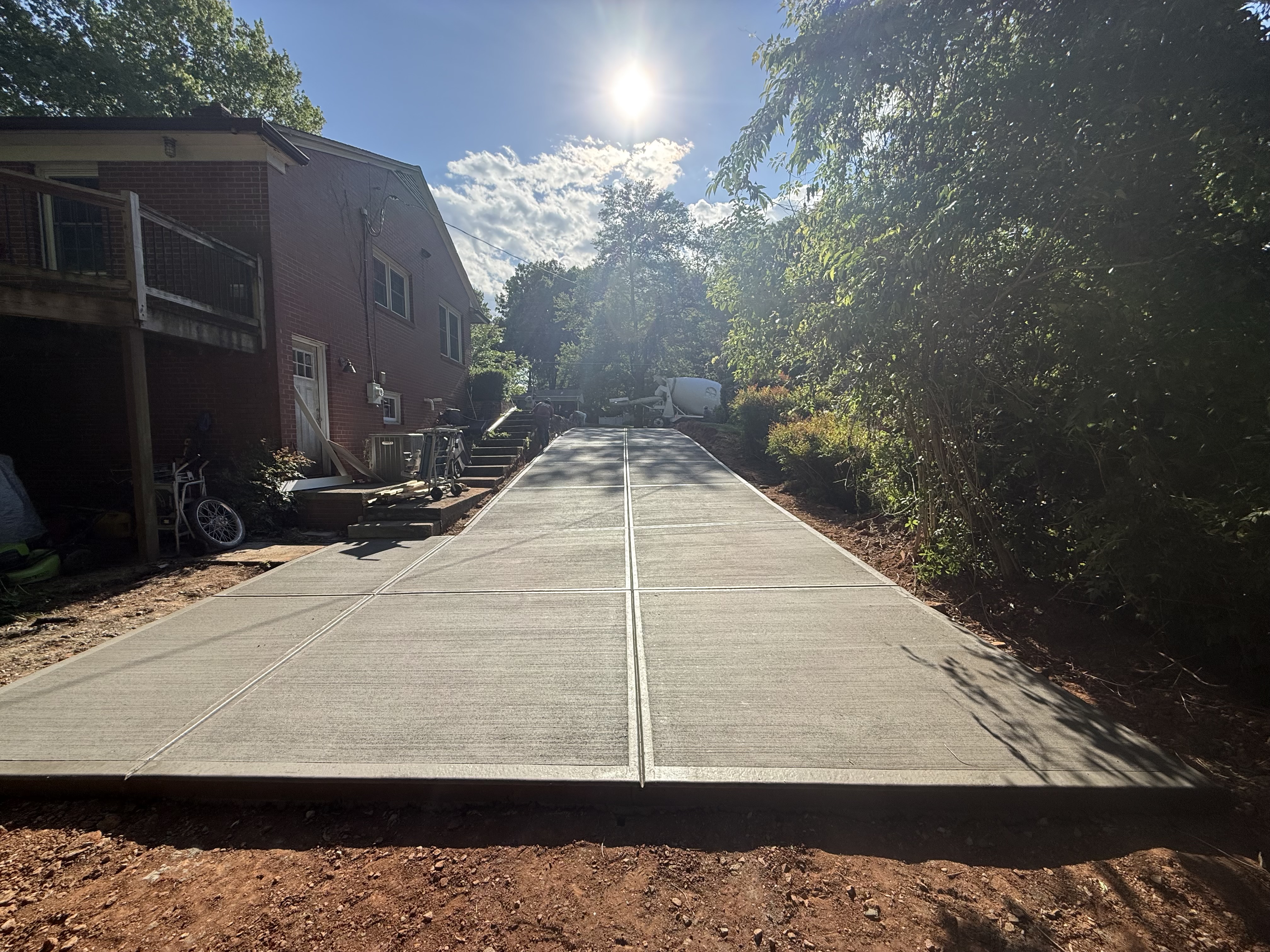
Driveway Replacement
Recent Job
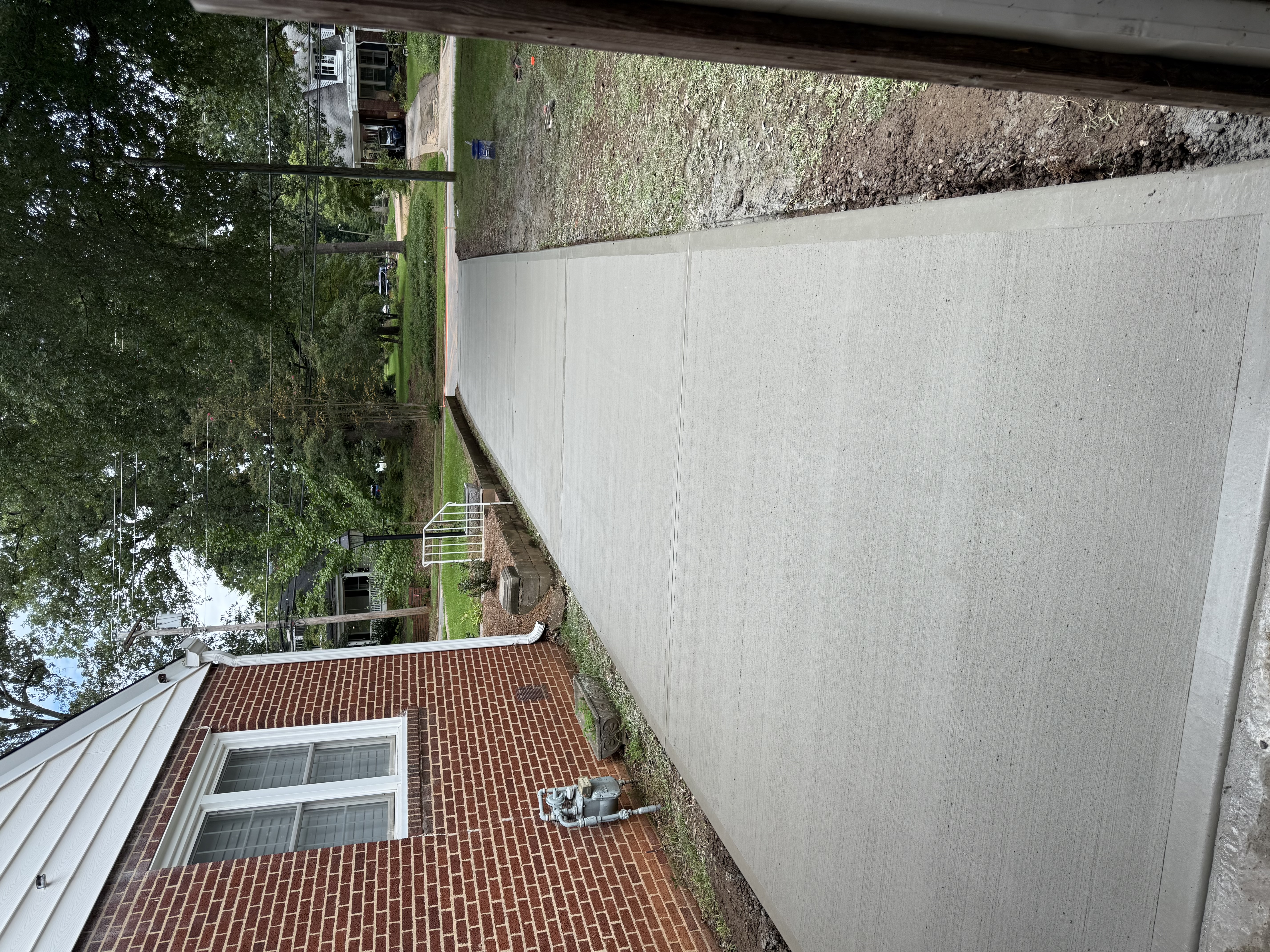
Driveway Replacement
Recent Job
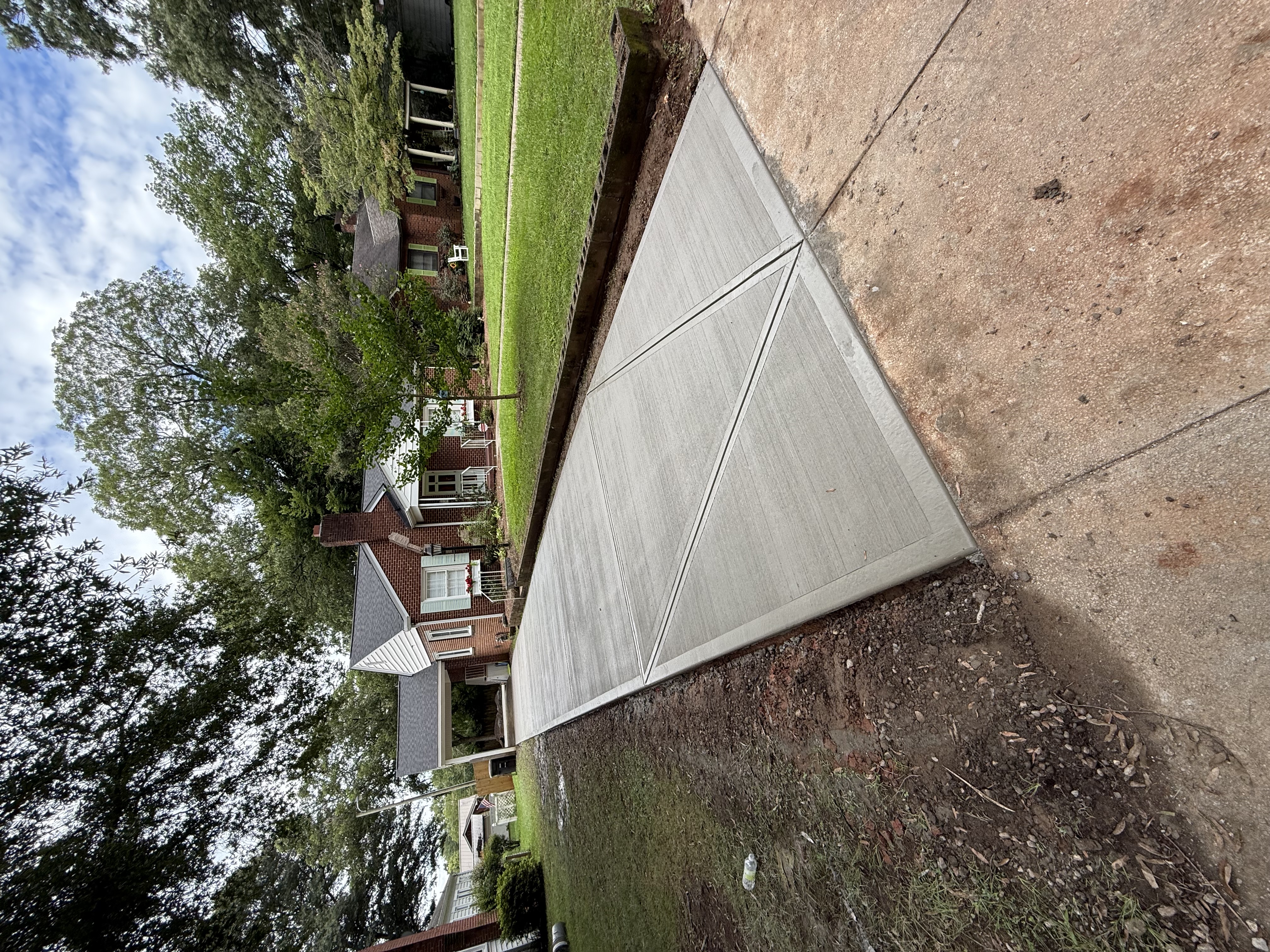
Driveway Replacement
Recent Job
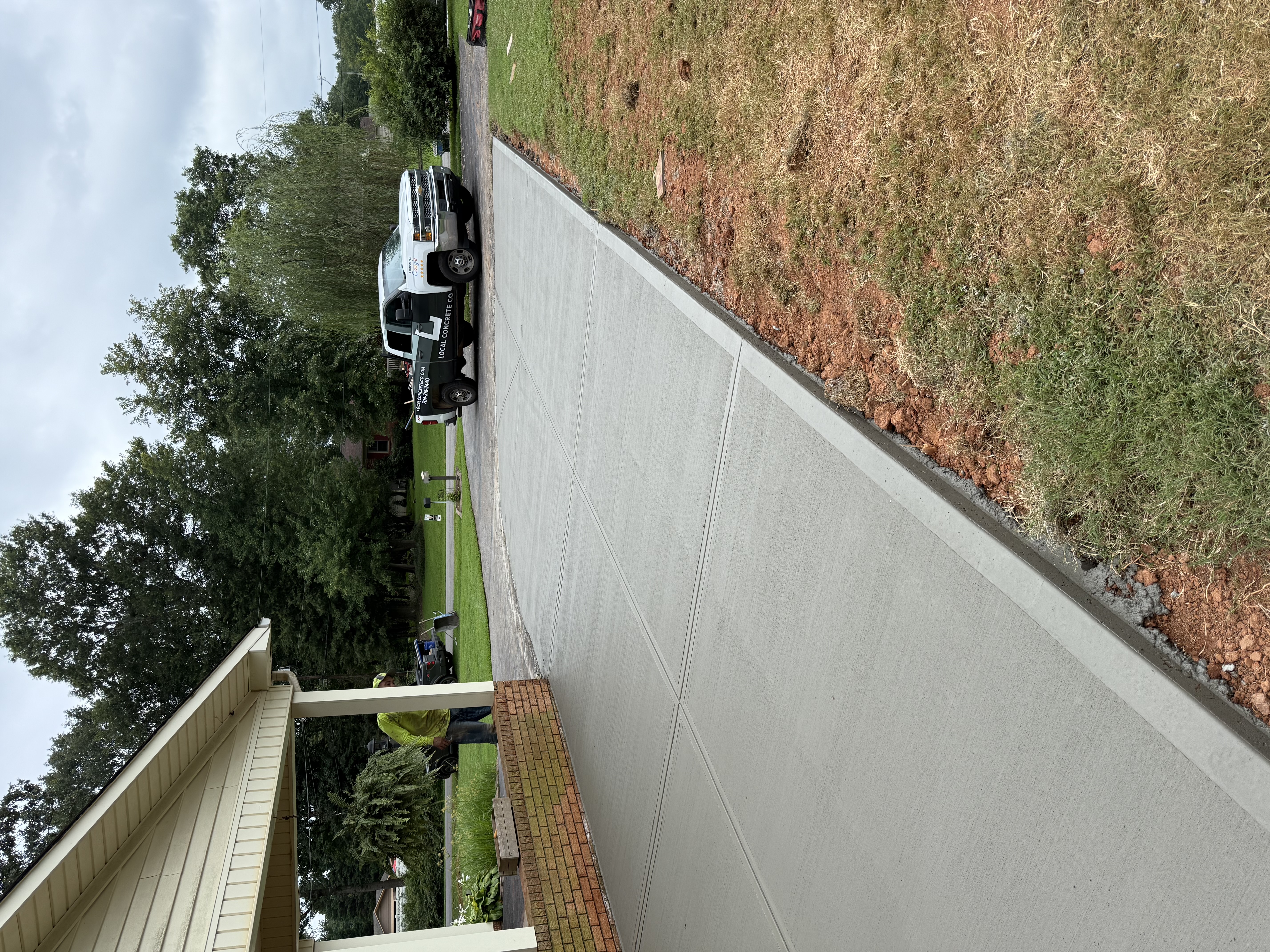
Driveway Replacement
Recent Job
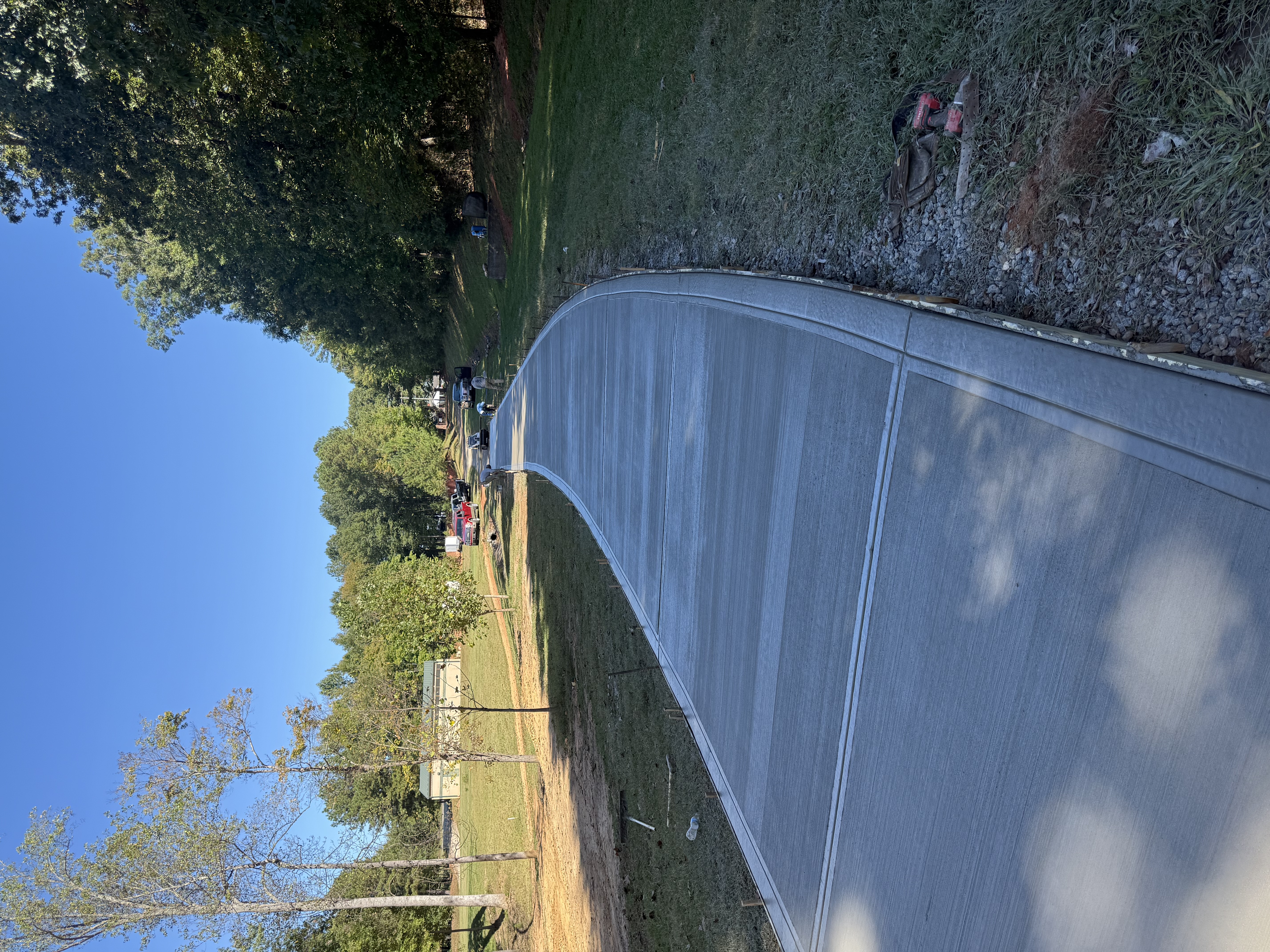
Driveway Replacement
Recent Job
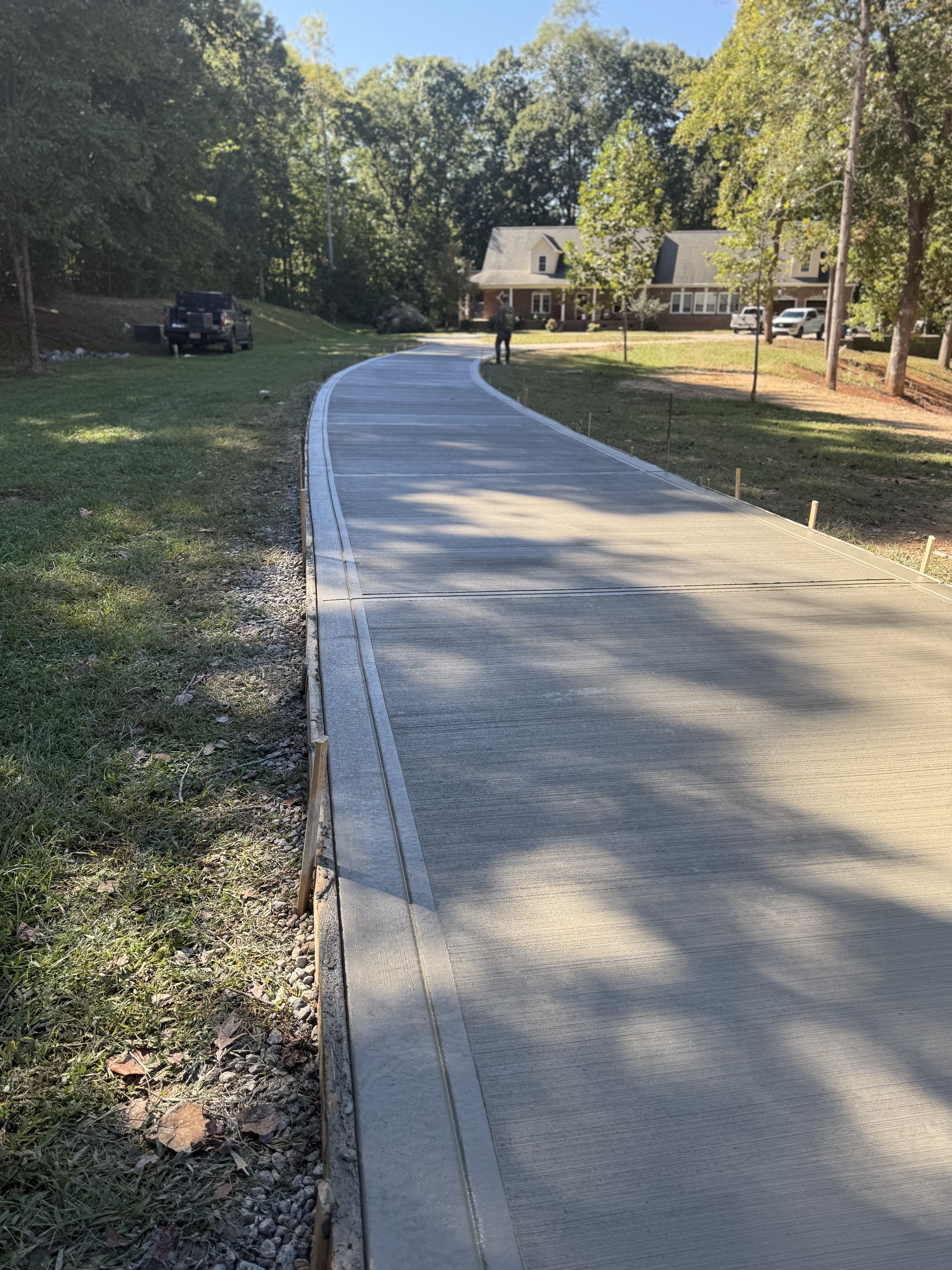
Driveway Replacement
Recent Job
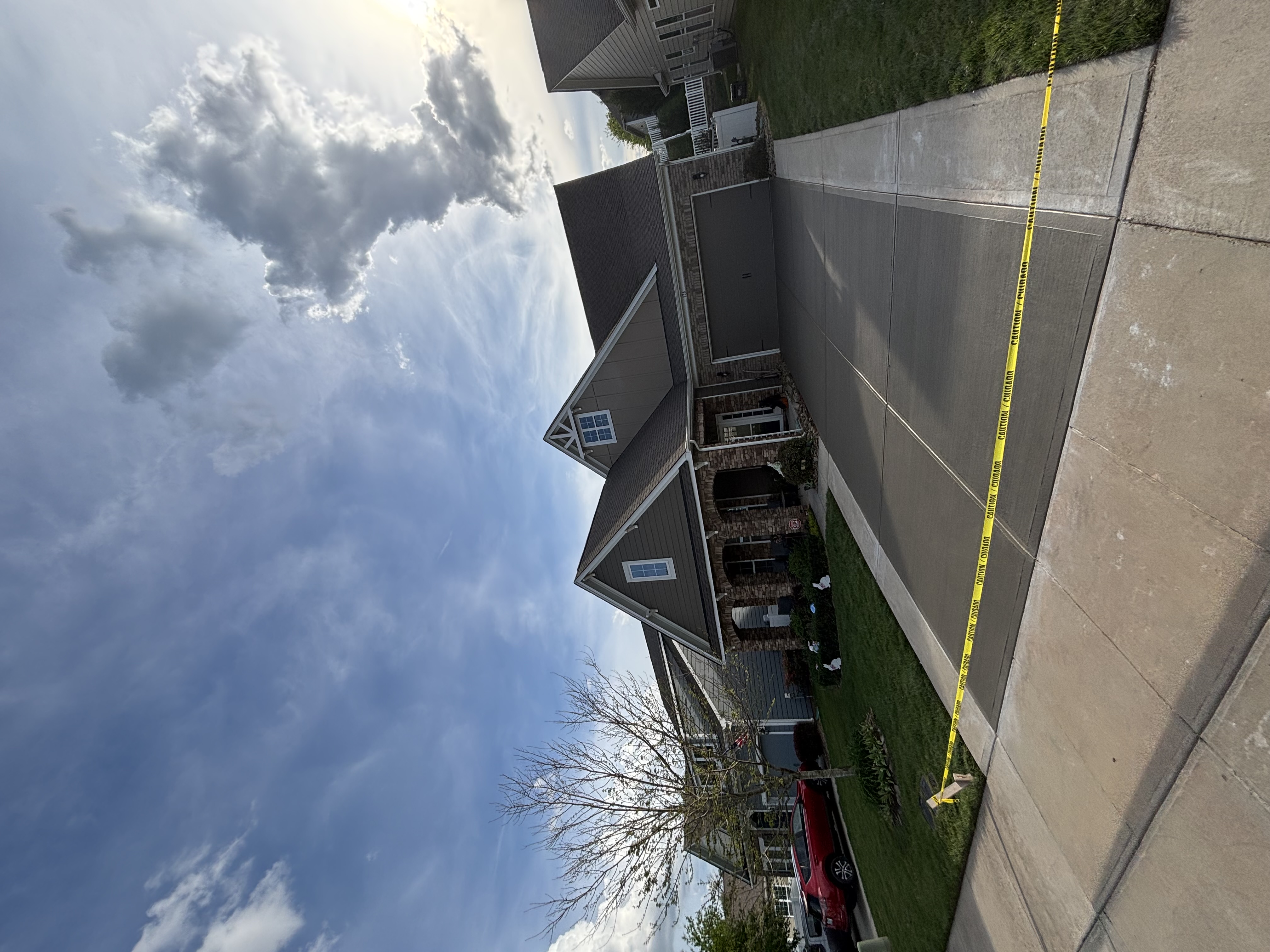
Driveway Replacement
Recent Job
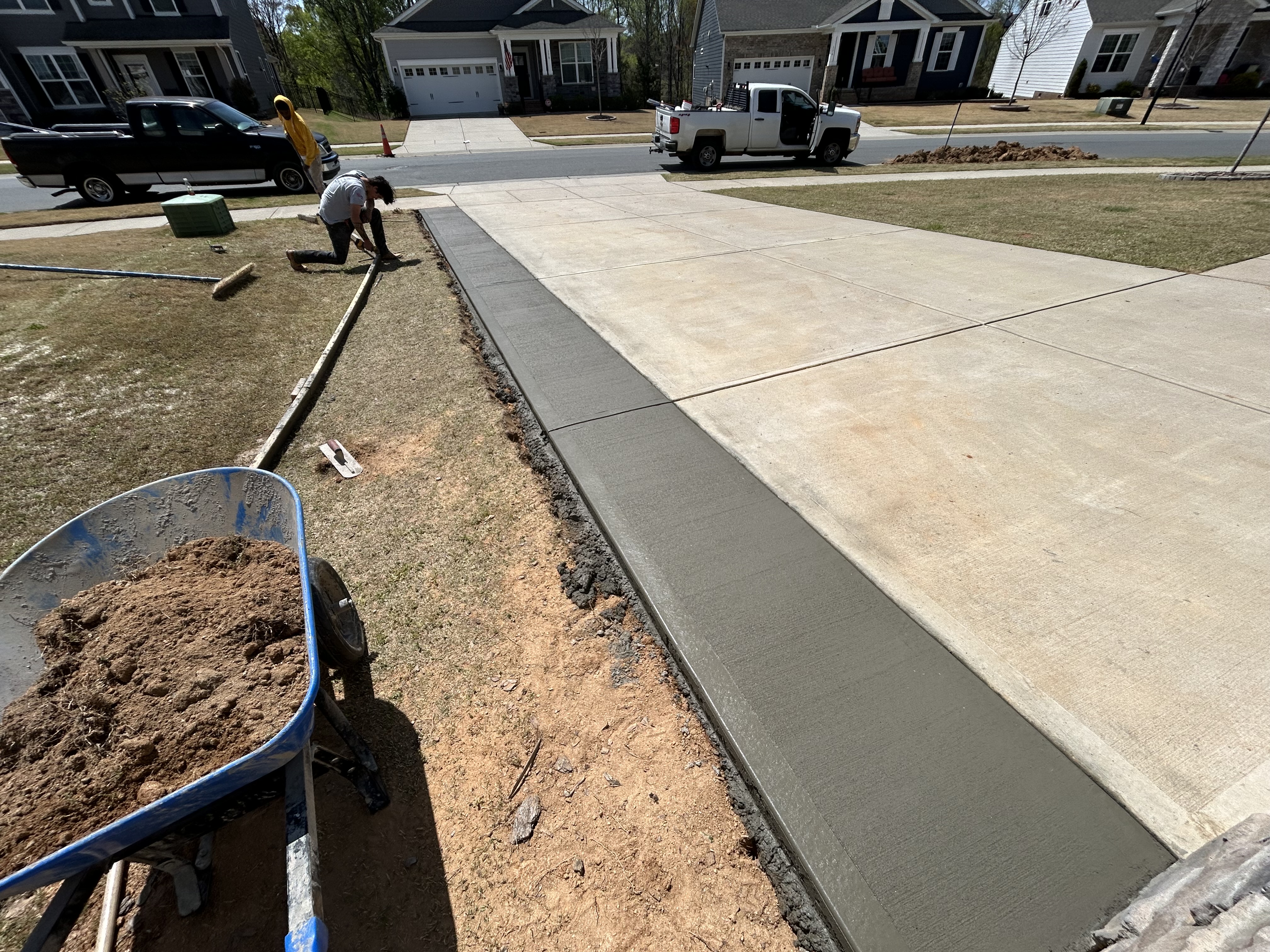
Driveway Replacement
Recent Job
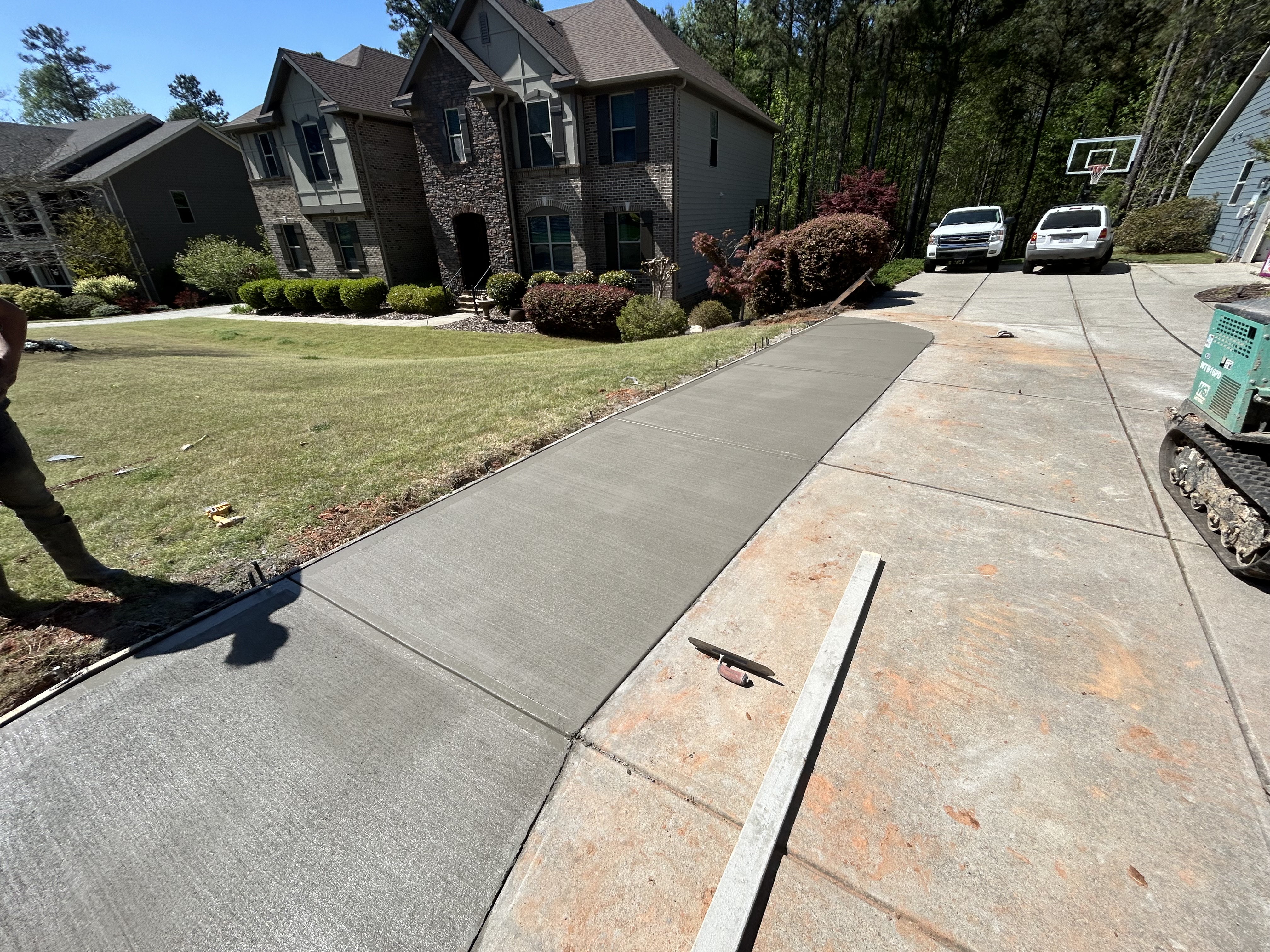
Driveway Replacement
Recent Job
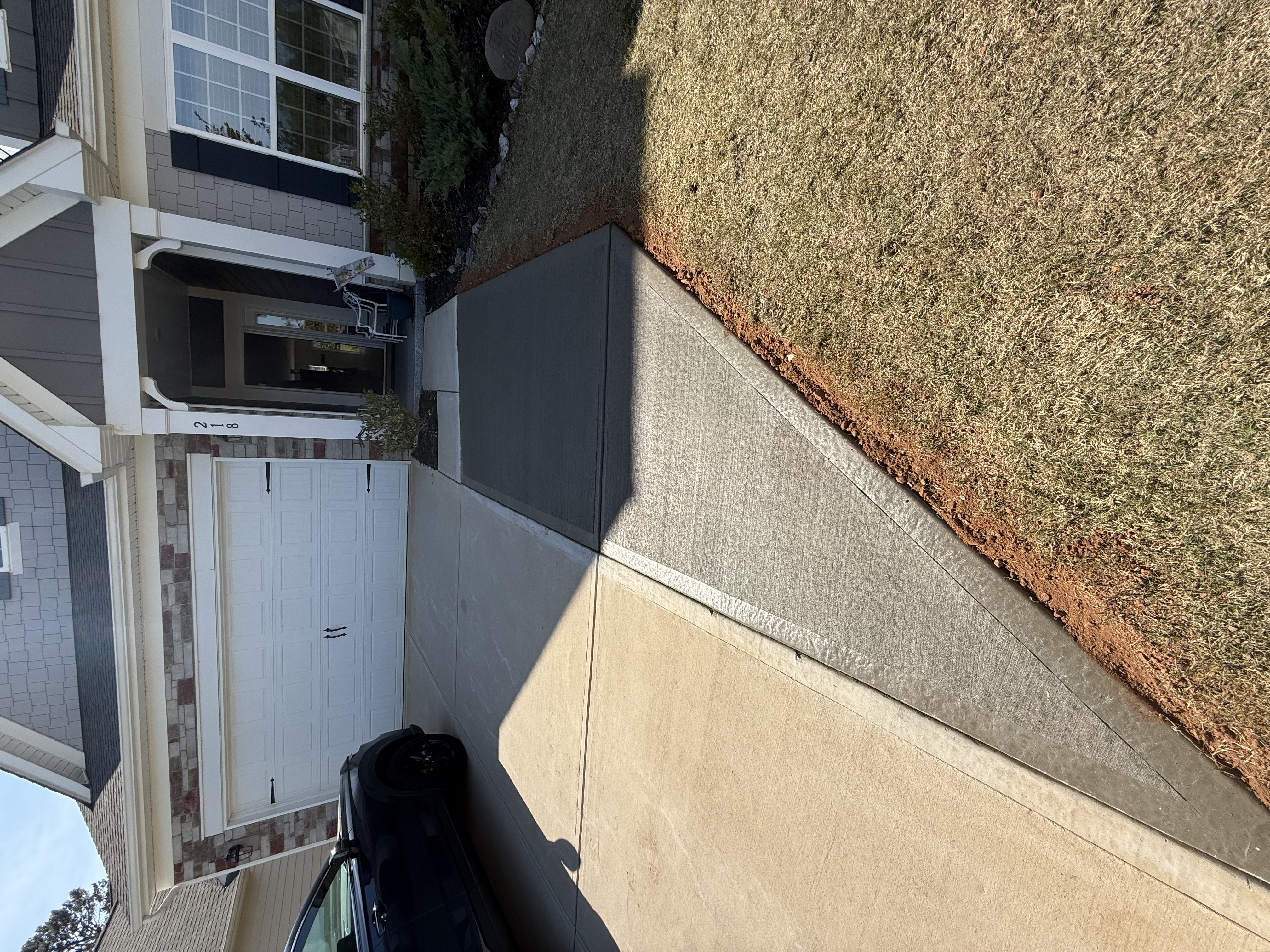
Driveway Replacement
Recent Job
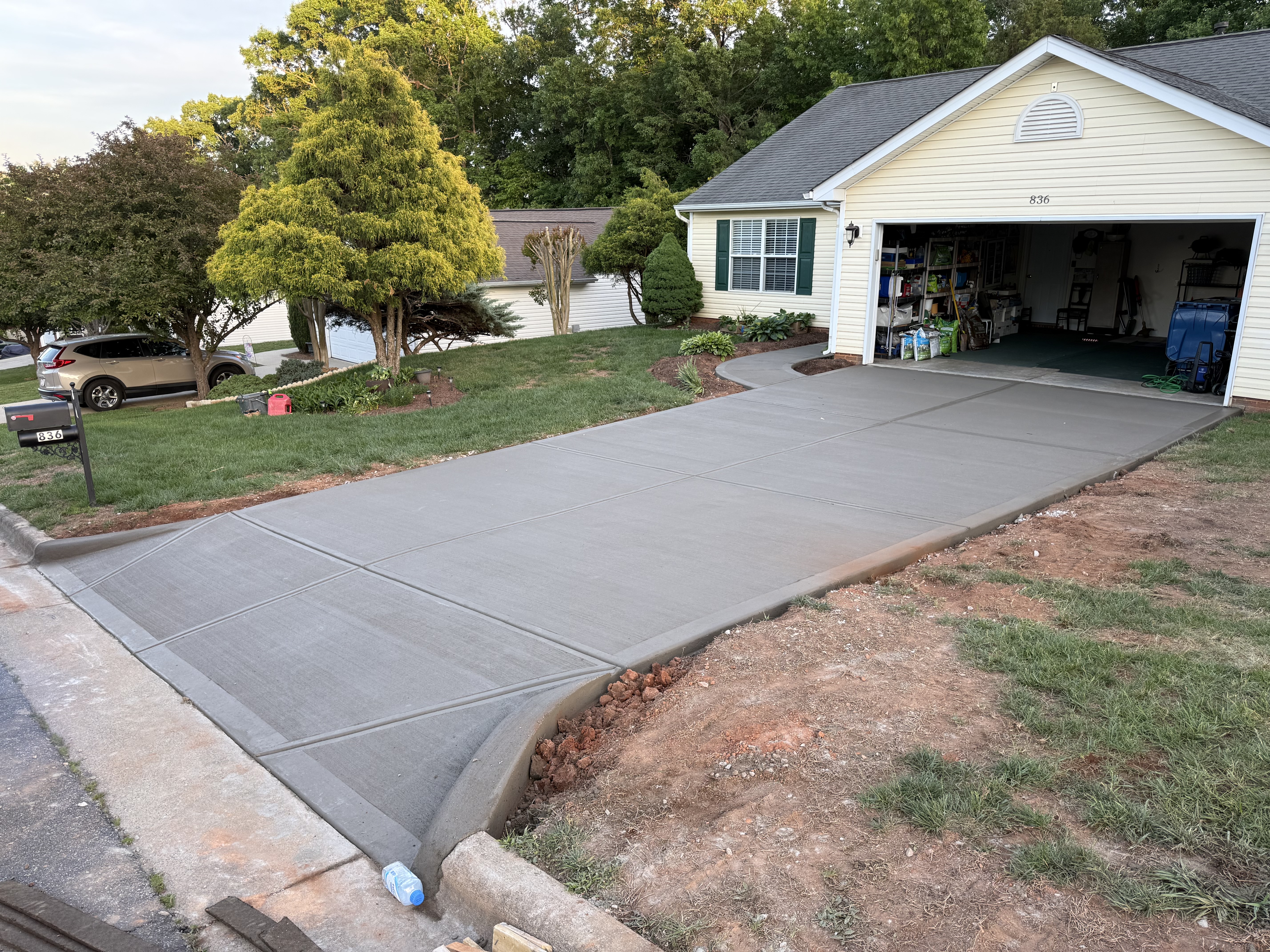
Driveway Replacement
Recent Job
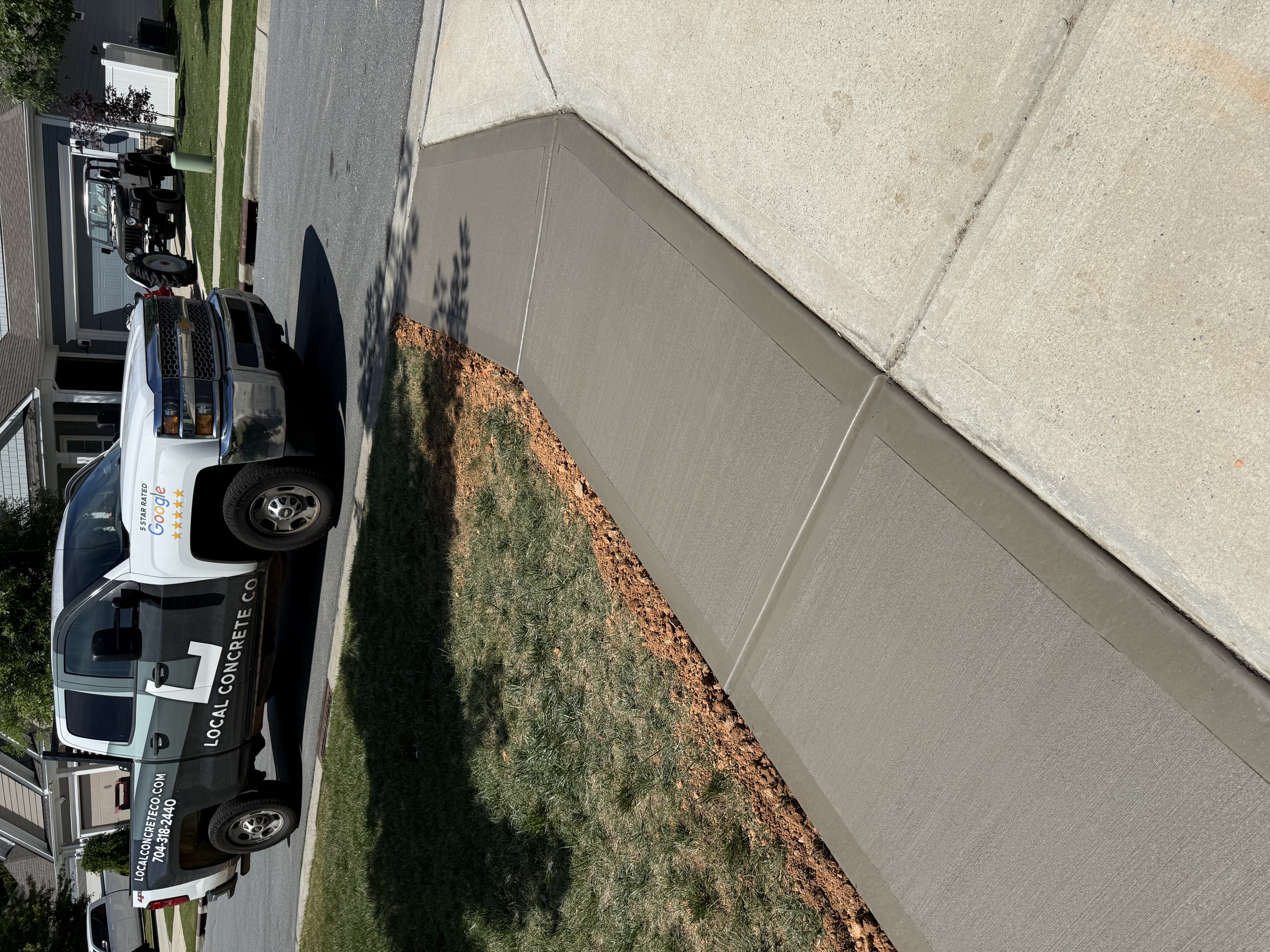
Driveway Replacement
Recent Job
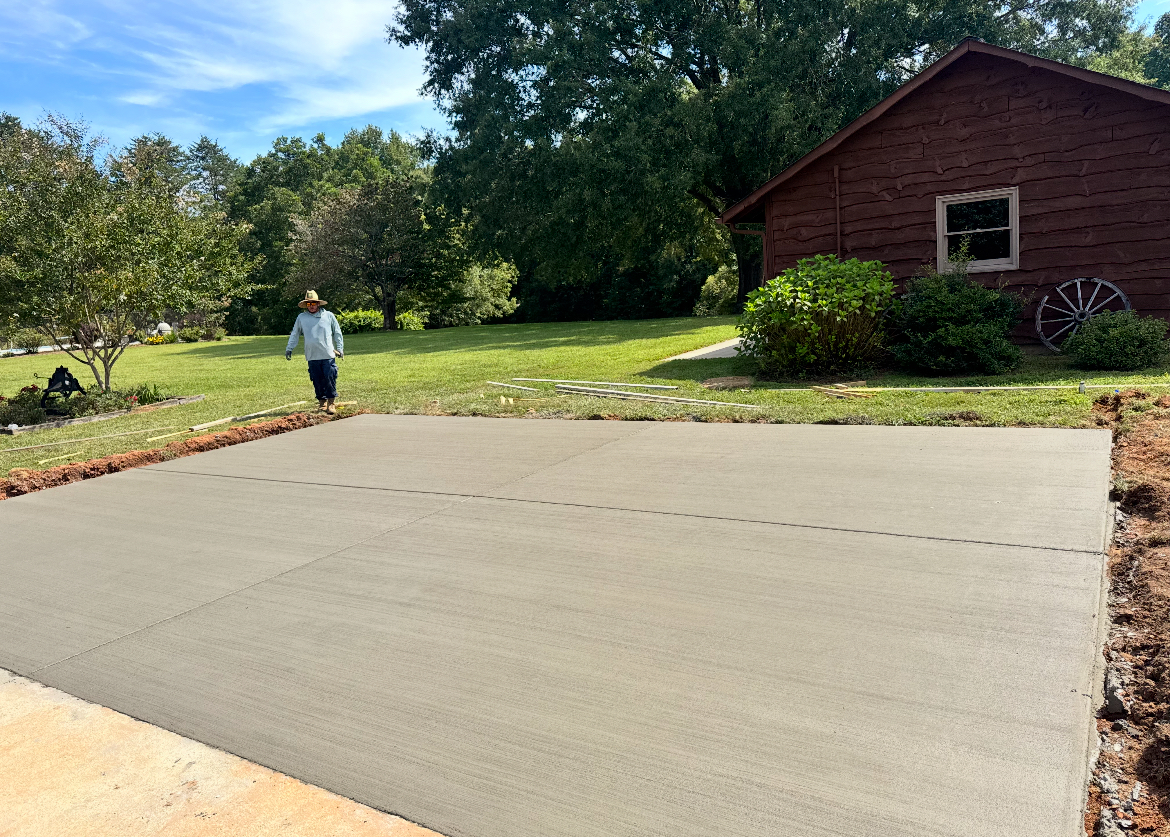
Driveway Replacement
Recent Job
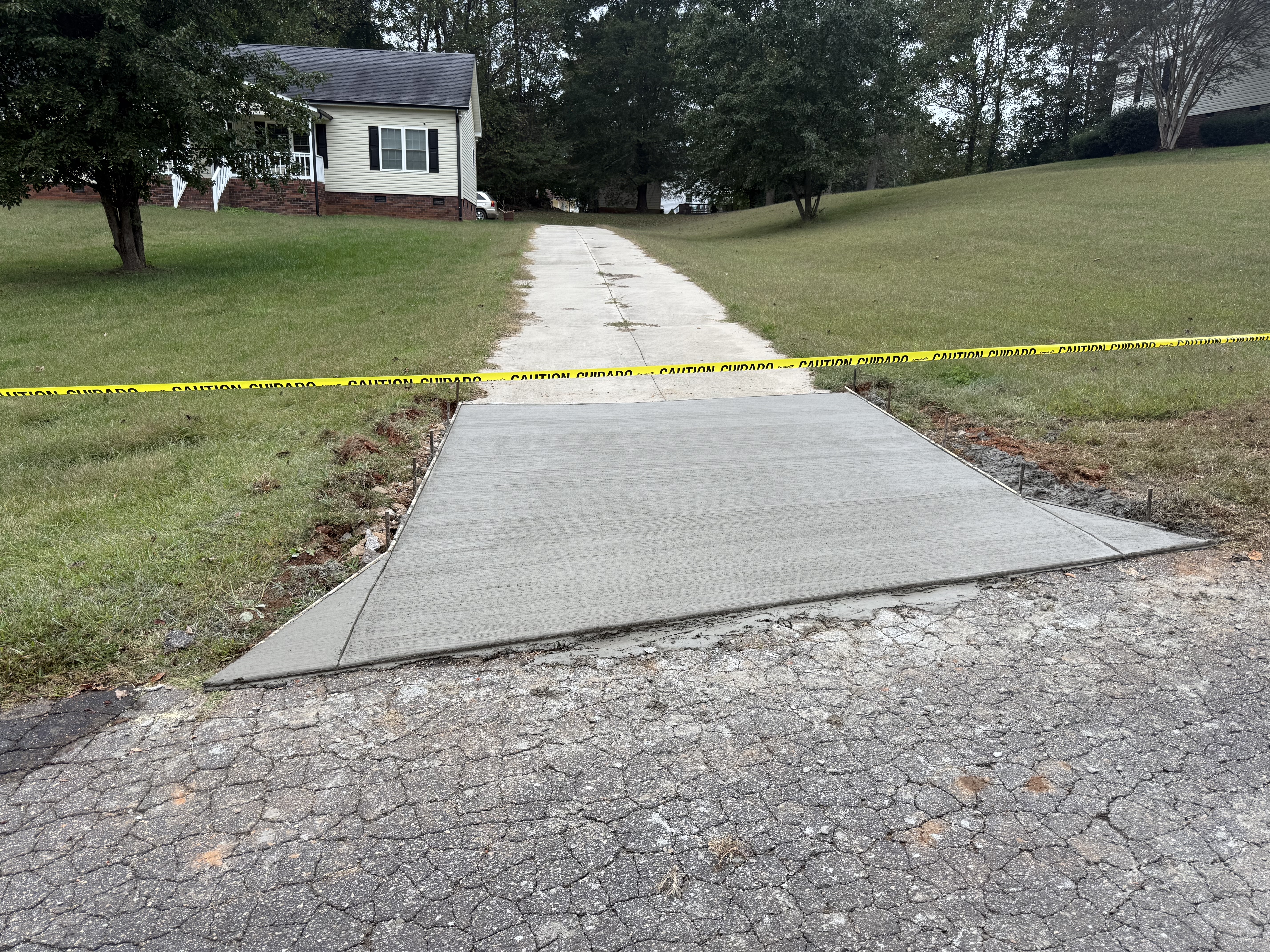
Driveway Replacement
Recent Job
Driveway Replacement
Recent Job
Driveways We've Replaced
Slide across each pair to see the same Charlotte-area driveway pre-demo and after we poured the replacement — apron tie-in, control joints, brushed finish. Zero stock imagery below; every slab was measured, formed, and troweled by our crew.
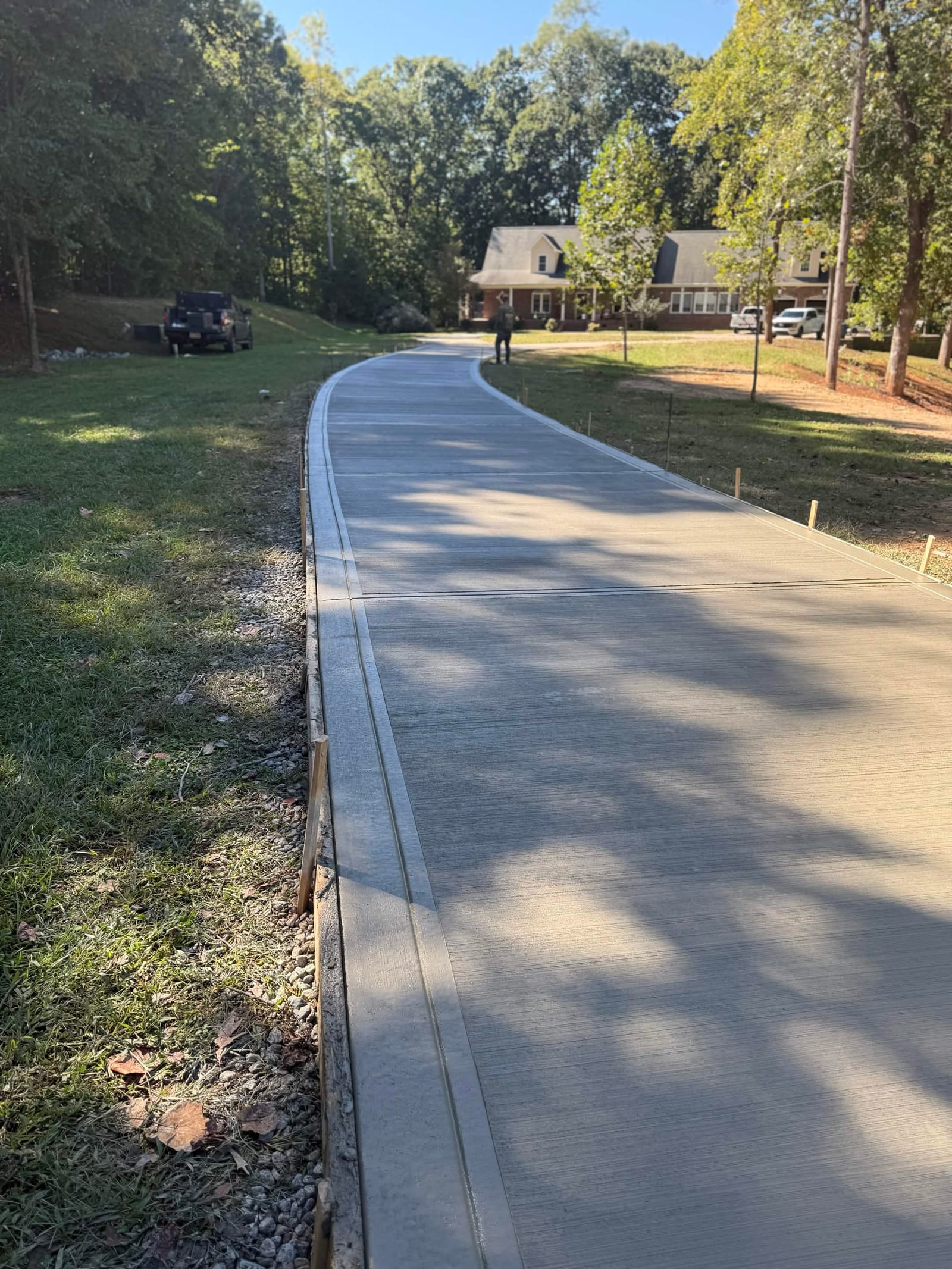

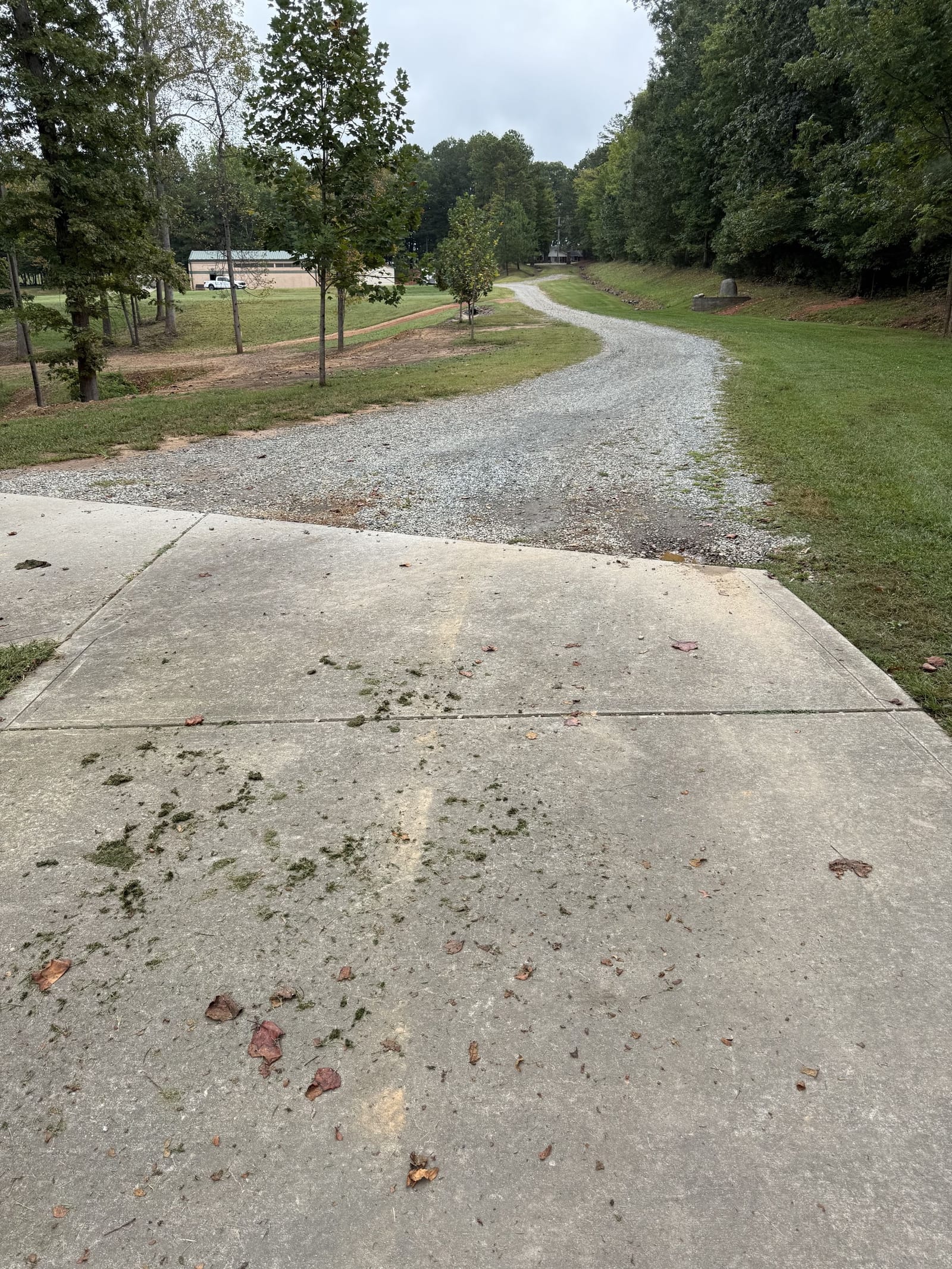
Full Residential Replacement
Old slab out, fresh pour with new apron tie-in
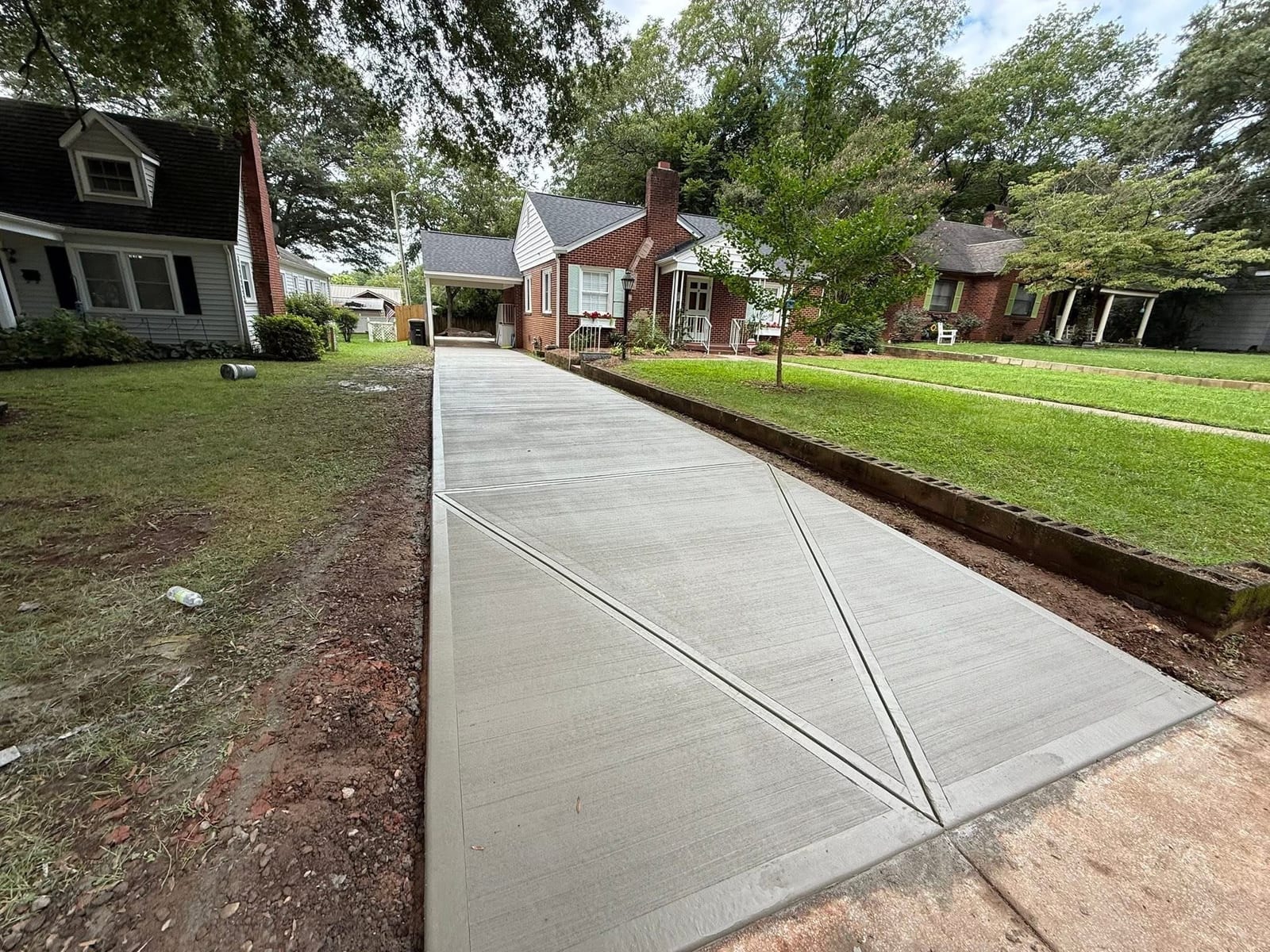
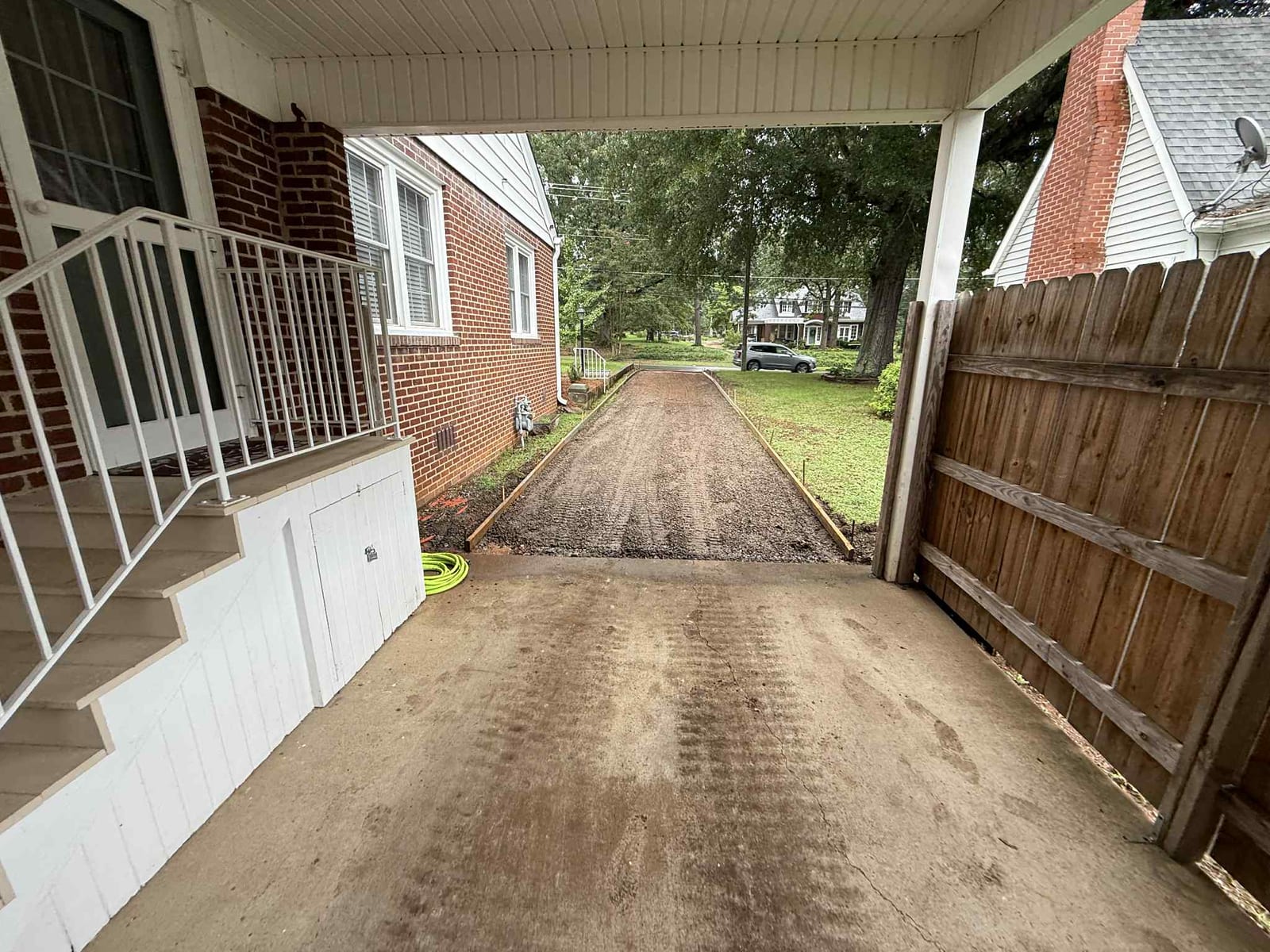
Driveway Revamp
Tear-out, re-grade, decorative border on broom field
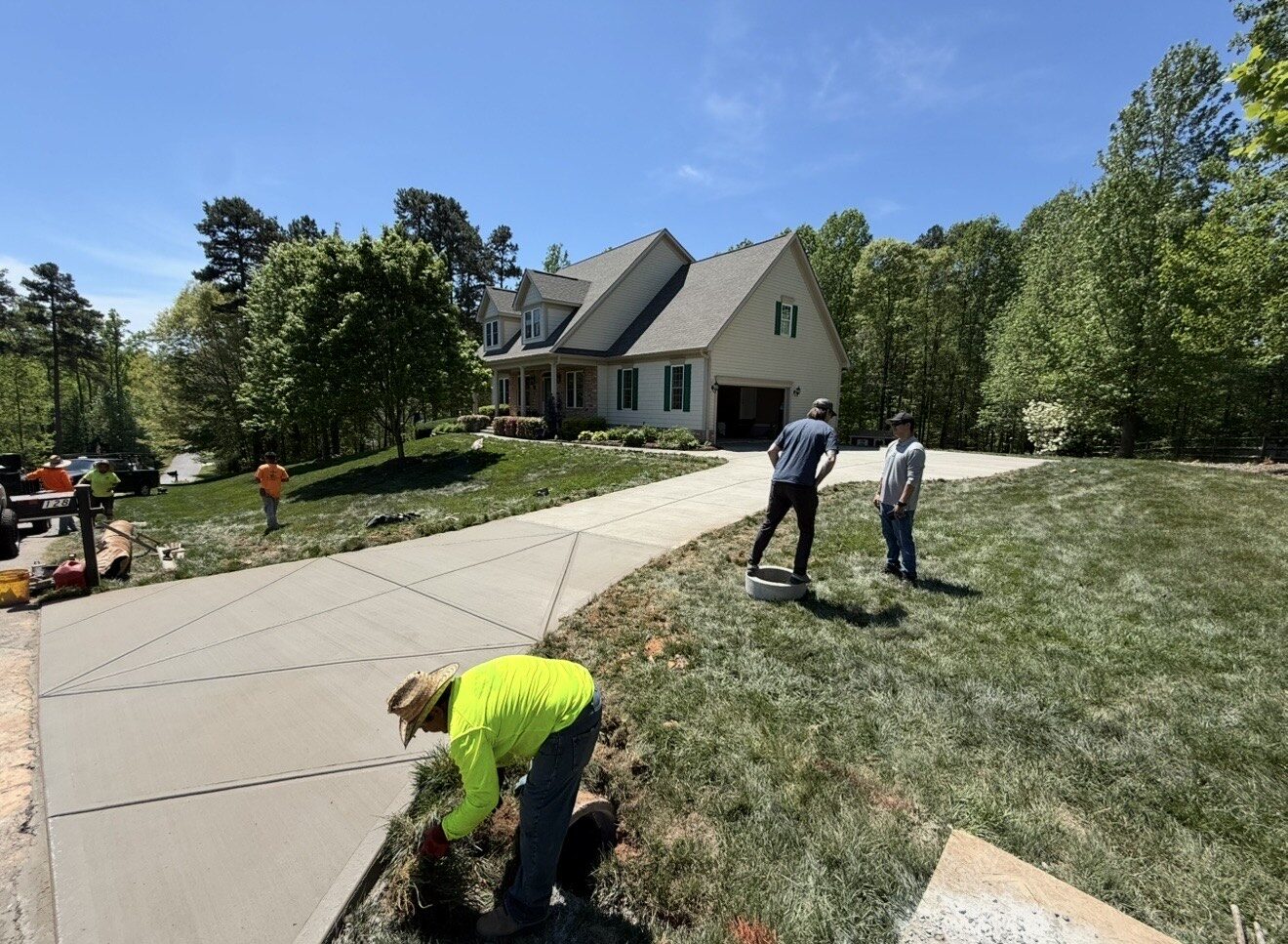
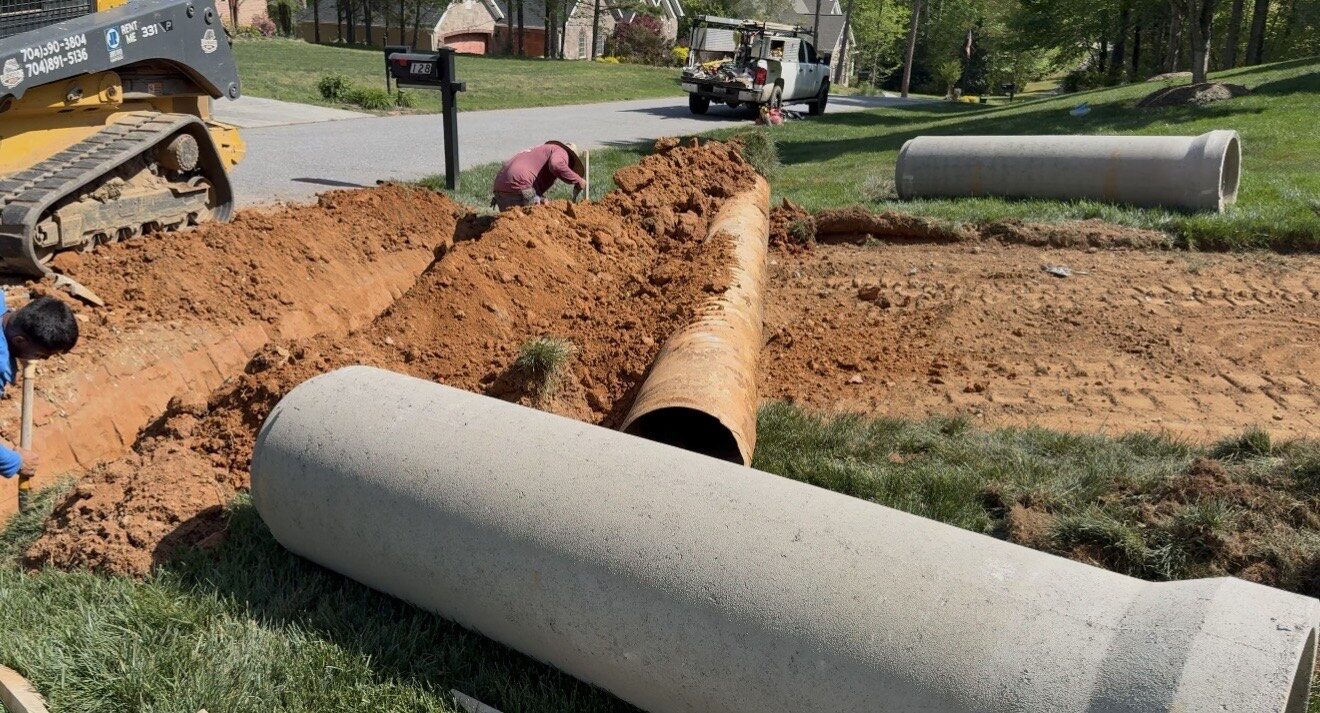
Failed Slab Replacement
Cracked and heaved slab replaced with new pour
Built right on a proper base, a concrete drive holds up for 25 to 40 years. But once the field is checkerboarded with cracks, the apron has dropped a half-inch below grade, tree roots have pushed a panel skyward, or water is pooling in spots that were dry a decade ago, patching is really replacement on a payment plan. Overlays and shallow fills on a slab suffering base failure or map cracking do nothing for load capacity — they just keep the cash outflow steady until the pour becomes unavoidable, and then stack that spending on top. Reading the moment when repair economics quit working is where an honest quote begins.
Local Concrete Charlotte scopes driveway replacements from Steele Creek and Providence through Mint Hill, Matthews, and out into Union County, starting every job with a full walk-through. The look covers slab age, existing crack pattern, apron shape, panel settlement, red-clay subgrade condition, tree proximity, drainage, tie-in geometry at the garage or walkway, and how the drive will actually be worked going forward. Out of that comes a written spec: demo scope, disposal, subgrade correction, base rebuild, thickness, reinforcement, joint layout, mix design, cure schedule, finish. Total on paper, every line accounted for. No deposit up front. No pressure. No vague scope on the invoice.
Our Driveway Replacement Services
Existing conditions drive replacement scope more than any other variable, which is precisely why a written spec matters more on replacements than on any new pour.
- Complete tear-out and rebuild — demo the old slab, haul it off, correct the subgrade, build the base, and lay the new pour
- Section-only swaps on drives where most of the slab is still doing its job and only the failed panels need to go
- Rebuilds paired with a footprint change — widening the drive, extending it, or reshaping it while the demo is already running
- Pours that include drainage rework — resetting the subgrade grade to solve water problems the old drive lived with for years
- Base upgrades built into the replacement when the original stone bed was too shallow to protect the slab
- Decorative finish swaps rolled into the new pour — broom to stamped, integral pigment, exposed aggregate, or edge banding
- Curb-cut work and apron reconstruction at the street tie-in bundled into the job
- Extra thickness at the garage threshold where wheel loads concentrate hardest
We spec each replacement around forward use, not past use. A drive built years back for two sedans that now needs to hold a fifth-wheel gets an entirely different mix and thickness than a like-for-like swap.
Demo, Haul-Away, and Subgrade Correction
The window between old slab out and new slab in is where a replacement earns — or loses — its expected service life. Skip the subgrade correction and a brand-new drive can start showing the same failures inside a decade.
- Run a clean saw-cut along the garage, walkway, and any section that will remain, giving the fresh pour a straight edge to butt against
- Break the old drive apart and load it out to a permitted concrete recycling yard — nothing dumped on your lot
- Strip back to bare subgrade and read it for soft pockets, buried construction debris, prior utility runs, or waterlogged clay
- Dig soft spots or organic material down to firm bearing ground, then rebuild with well-compacted stone
- Lay the base back to spec depth — usually 4 to 6 inches of compacted crushed stone for a residential drive sitting over Piedmont clay
- Set the drainage plane before compaction — crown, cross-fall, or one-way pitch dialed in at the subgrade stage
- Compact the stone in layered lifts rather than a single dump and roll
The slab lasts as long as what's underneath it lets it last. Roughly 40 percent of a solid replacement is below-grade work and 60 percent is above — but that 40 percent disappears from view after pour day, which is exactly why it belongs on paper before demo starts.
Get your free quote
We respond in less than 2 hours.
Why Local Concrete Charlotte?
- 01.Charlotte-metro crews, one trade
- 02.Line-item pricing, nothing hidden
- 03.One foreman from bid to walkthrough
- 04.Pay after the pour, never before
Our Concrete Installation Process
Every driveway replacement we pour runs through the same 18 checkpoints — from the on-site consult through the final walkthrough.
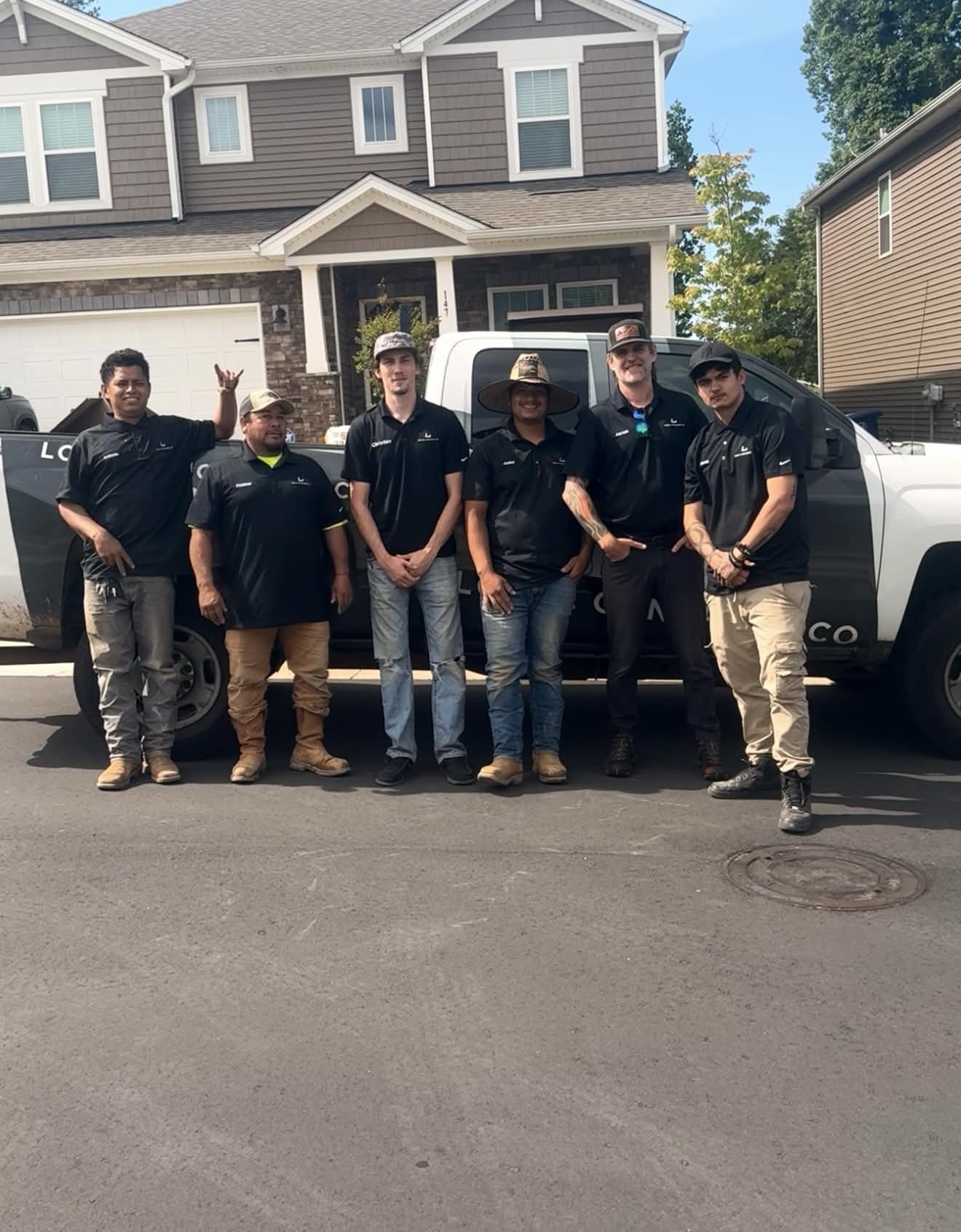
Consultation & Estimate
A crew lead walks your Charlotte-metro pad, shoots laser measurements across the footprint, notes tear-out volume plus pump-truck approach from the curb, and drops a fixed all-in bid in your inbox by the next business day.

Logistics & Scheduling
Crew calendar, pump availability, and Piedmont radar all get cross-referenced before your pour date locks in. Any front tracking through the 485 corridor inside a 48-hour window triggers a proactive reschedule call — never a rain-day gamble.
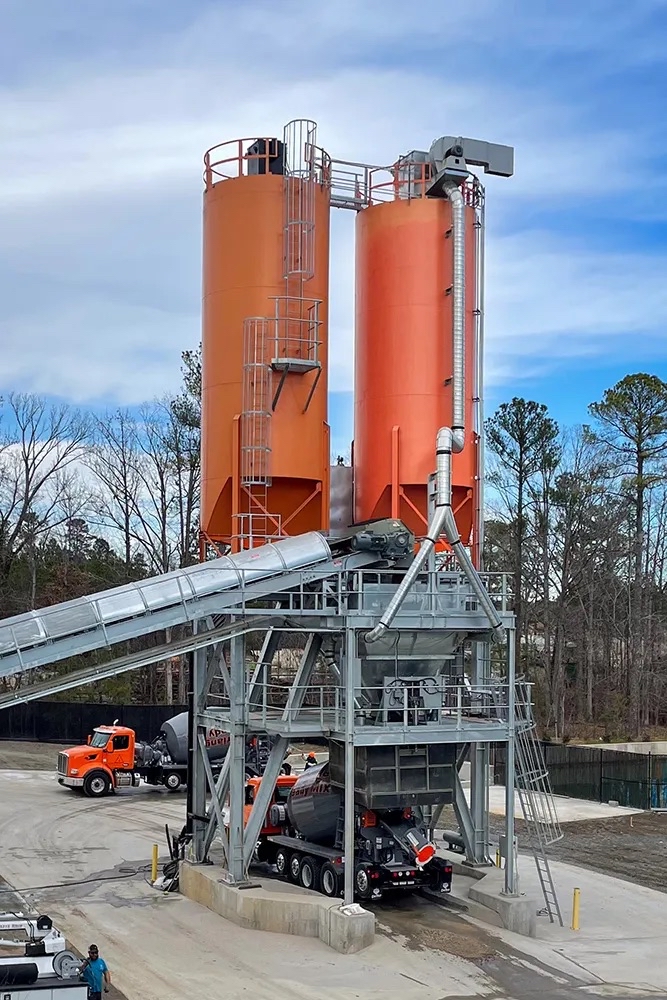
Custom Mix Design
Charlotte summers push 91F and the region sees 22 freeze-thaw cycles a year — both demand different mix chemistry. The batch plant hears from us the afternoon before with air-temp targets, slump range, retarder dose, and entrained-air percentage dialed in.
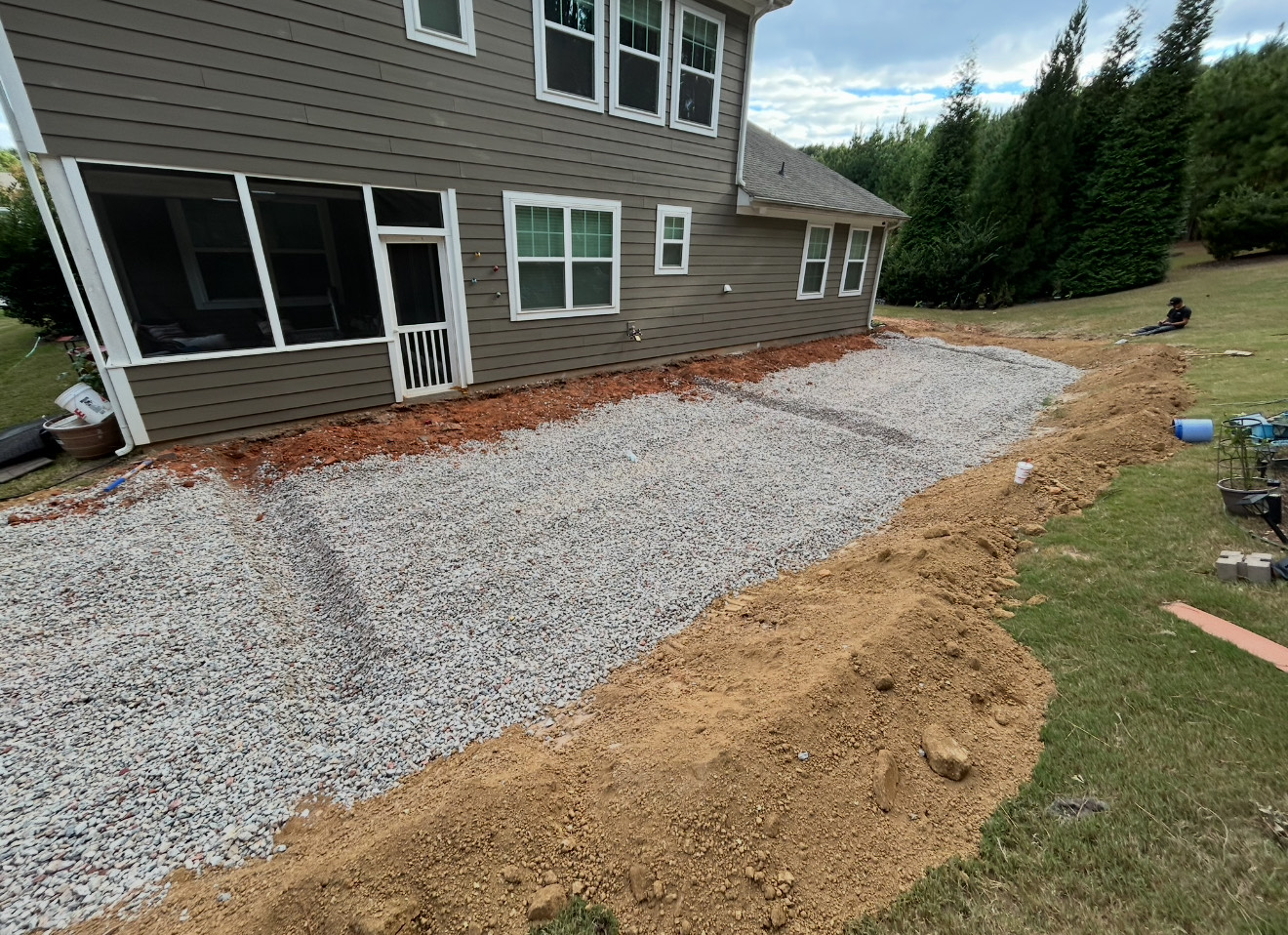
Site Preparation
Three-quarter-inch plywood gets staged over any turf the pump line crosses, ornamental beds around the pad get tarped, and the pump driver confirms his Mecklenburg approach route with the foreman before wheels touch the drive.
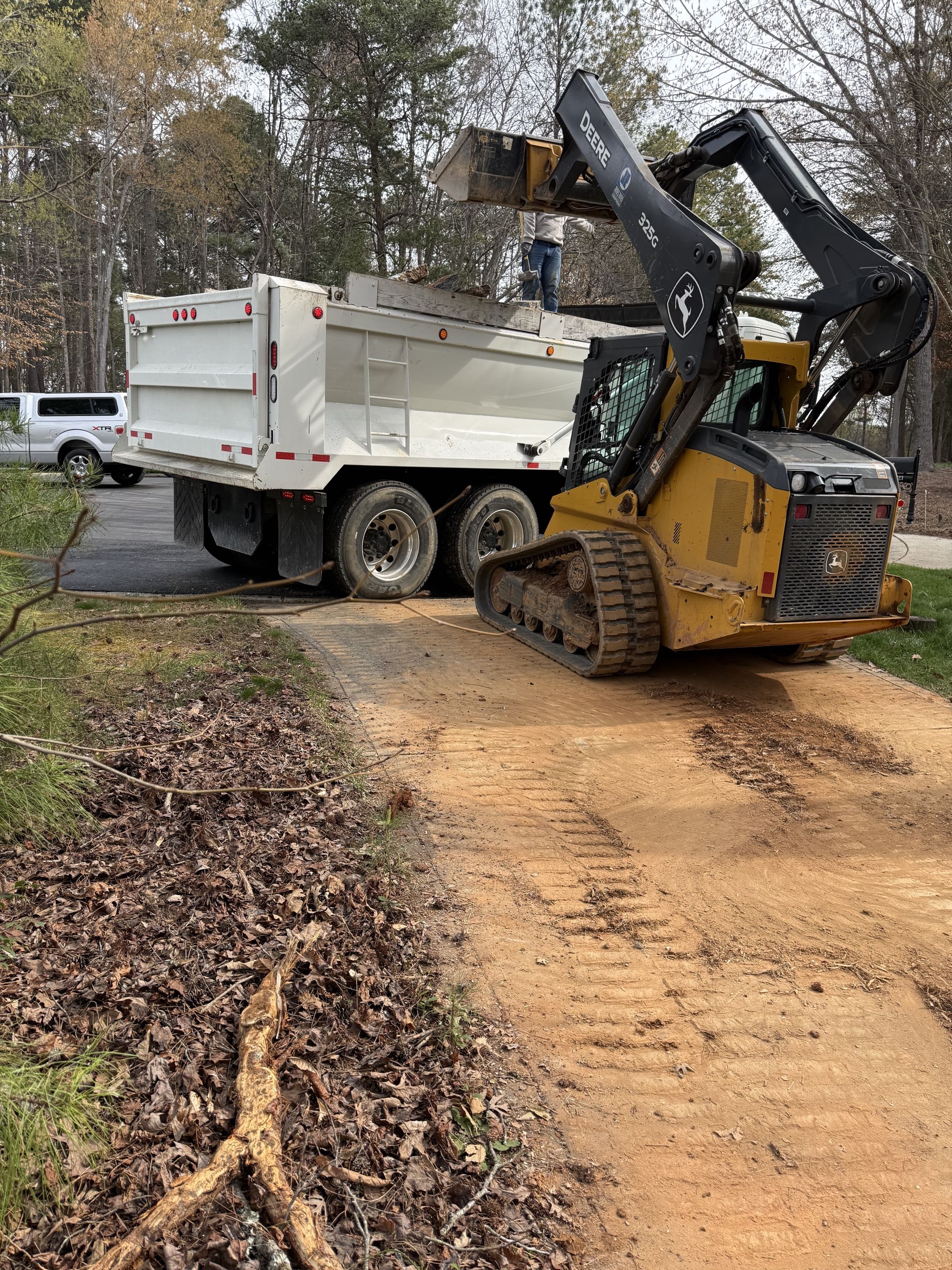
Demolition
Anything under six inches gets broken up by hydraulic hammer; reinforced sections get saw-cut into panels and pried out. A skid-steer loads every fragment straight into the dump truck — no rubble pile lingering on your property overnight.
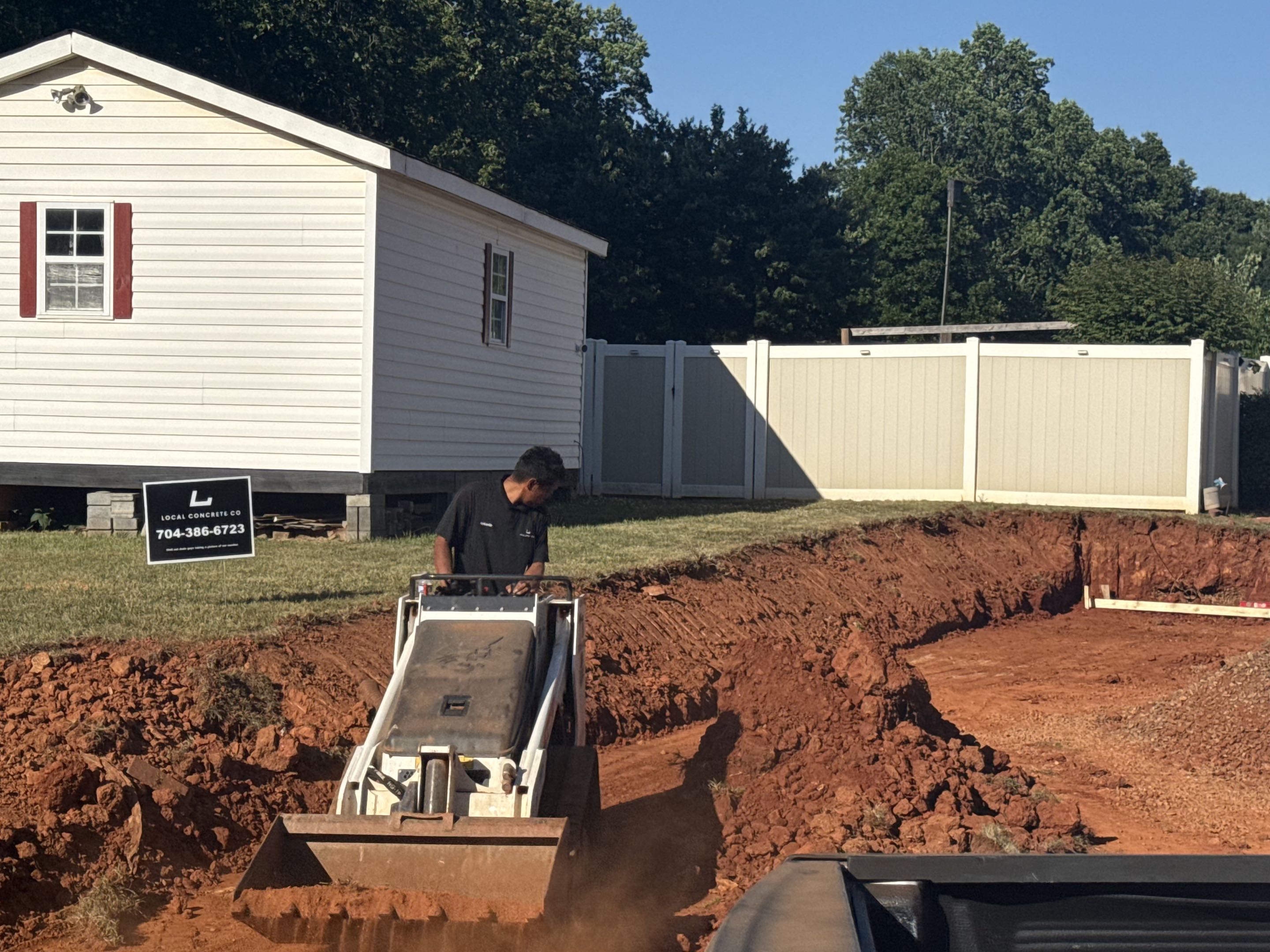
Grading & Forming
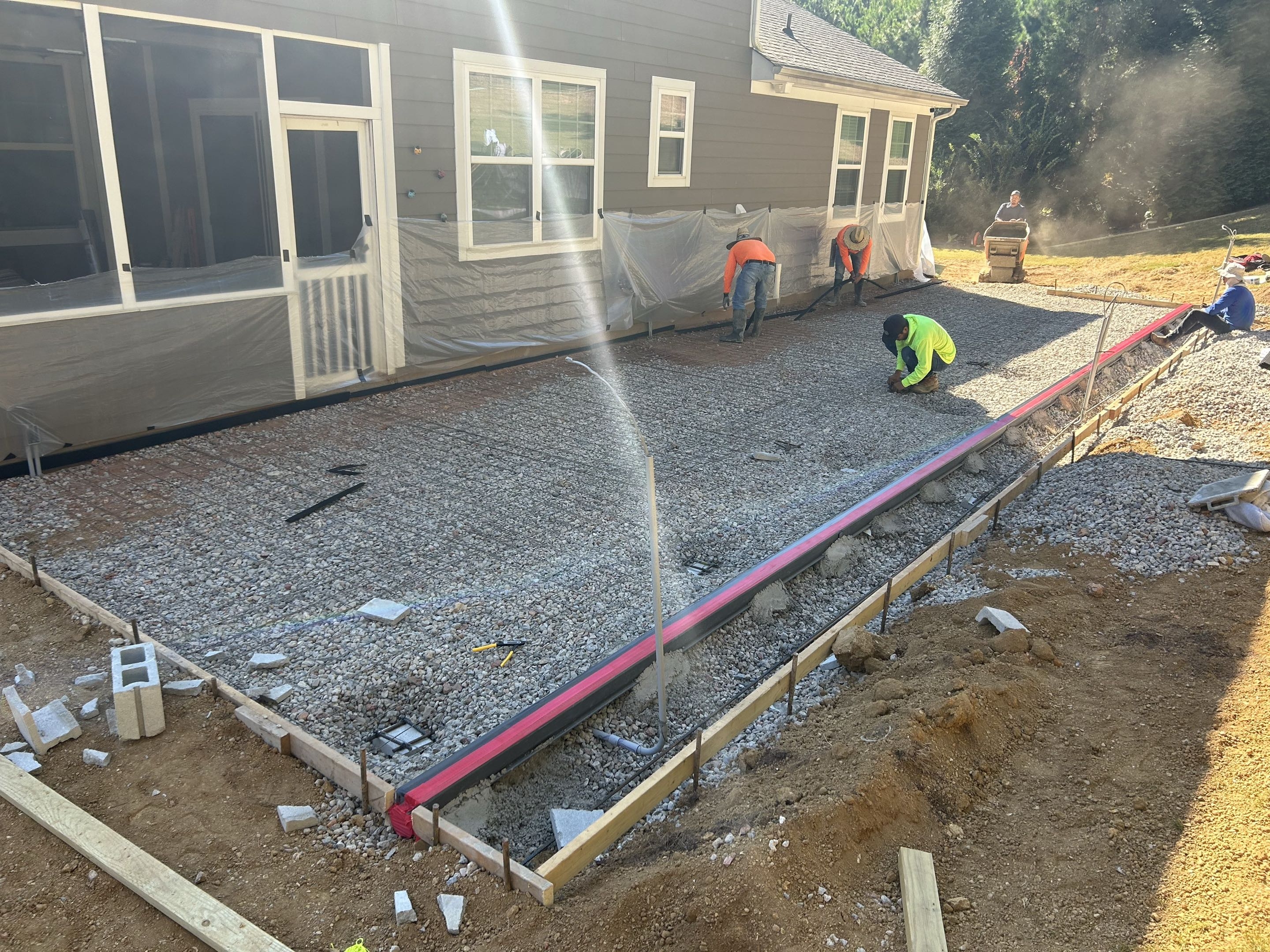
A compacted #57 stone base of four to six inches goes down in two lifts on every subgrade — critical over Piedmont red clay, which swells wet. Laser confirms a minimum 1/8-inch-per-foot fall away from the foundation, then 2x forms stake off at 32-inch centers.
Reinforcement
Grade-60 #4 rebar ties on 18-inch centers into a full grid, seated on chairs so the steel actually rides mid-slab where tension loads live. Red-clay shrink-swell chews through wire mesh in this region — we stopped installing mesh after enough callbacks to know better.
Pre-Pour Inspection
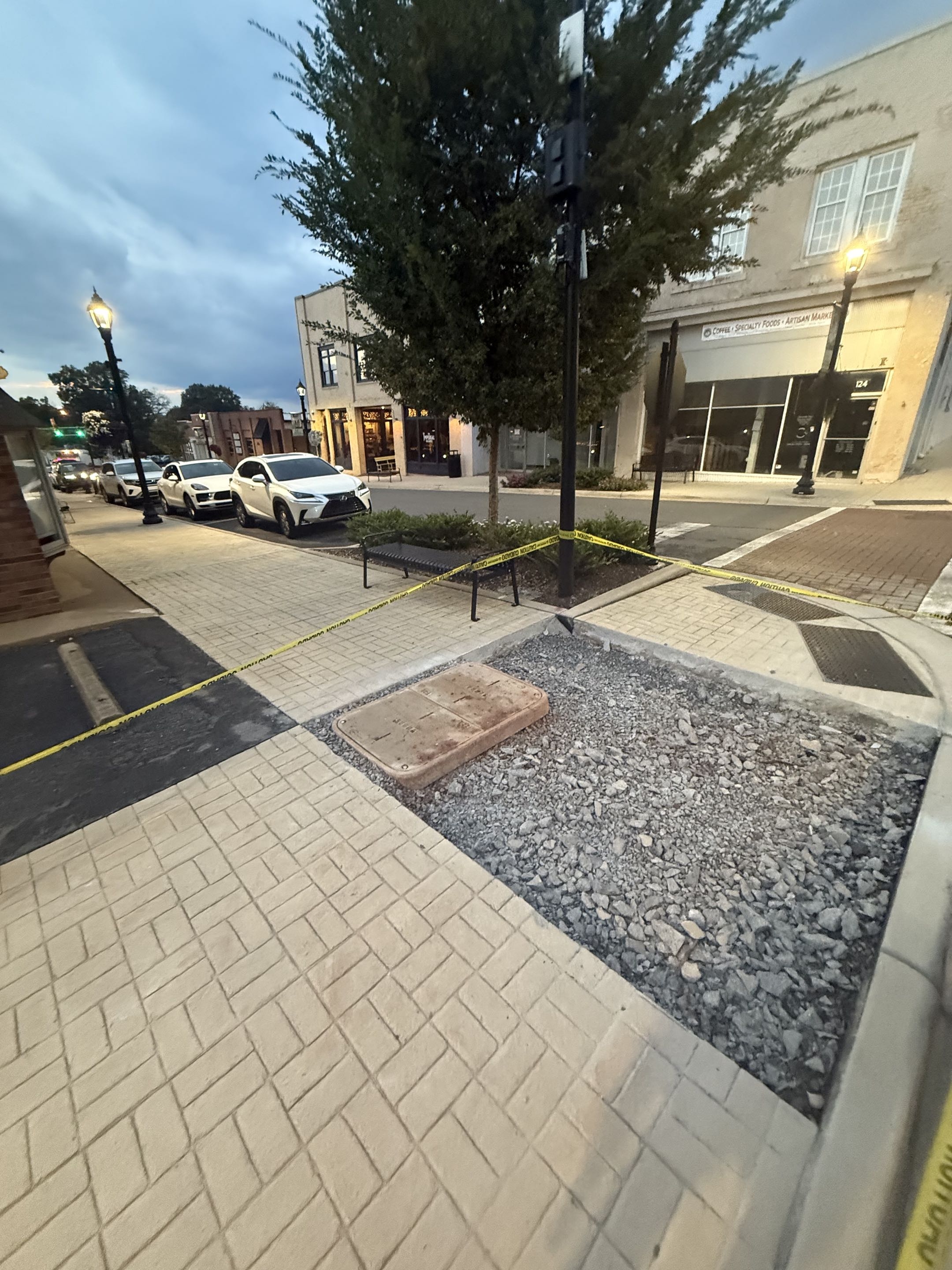
You and the foreman walk the formwork together — form elevations rechecked with the laser, rebar count photographed for the job file, drainage pitch verified end-to-end. This is the last window to catch anything before post-pour changes turn into demo invoices.
Slump Testing
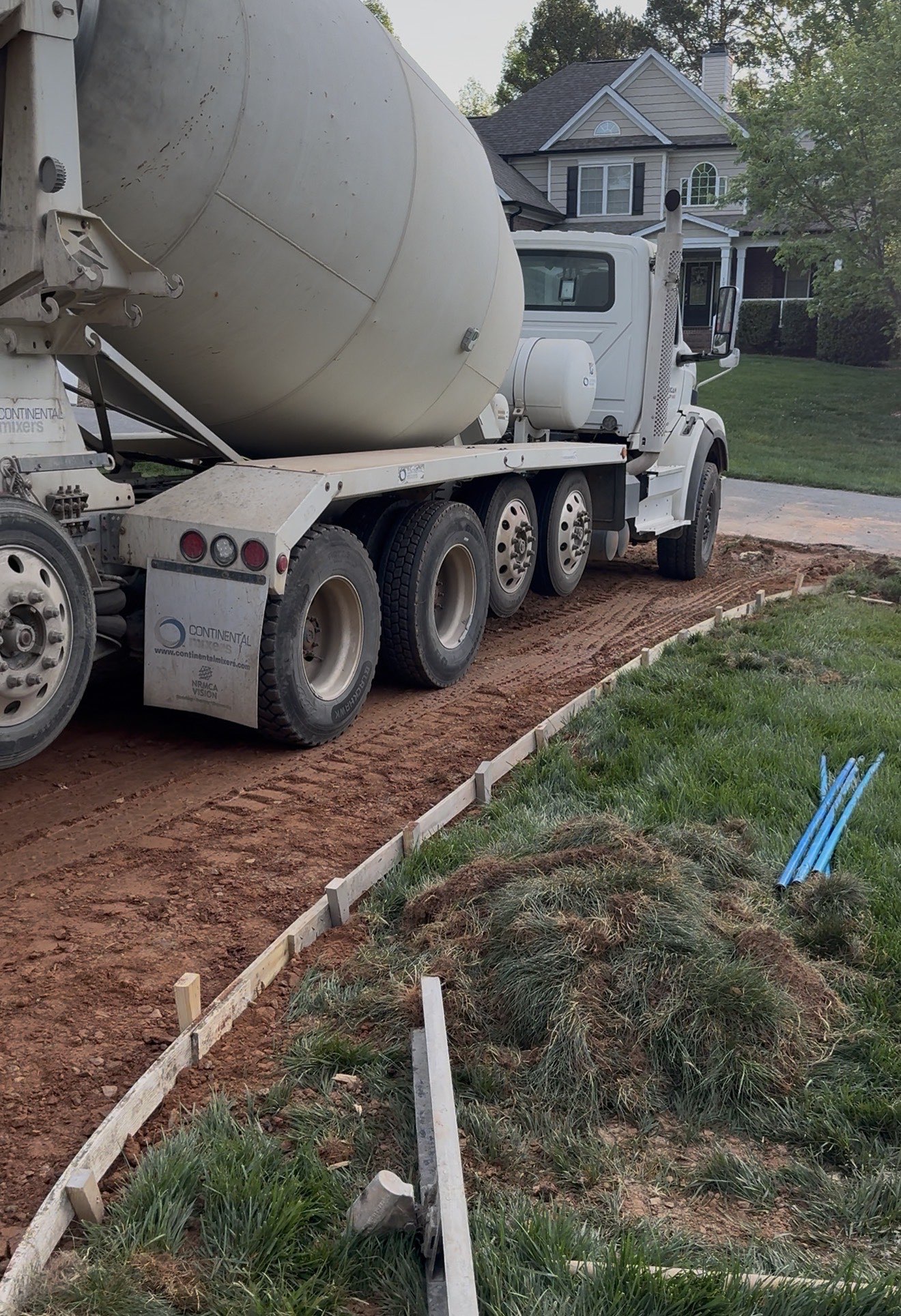
Every truck arriving gets its first yard cone-tested against the mix ticket before anything moves further down the chute. Numbers outside spec send that truck back to the plant — the pour waits, the slab never inherits a compromised batch.
Placement
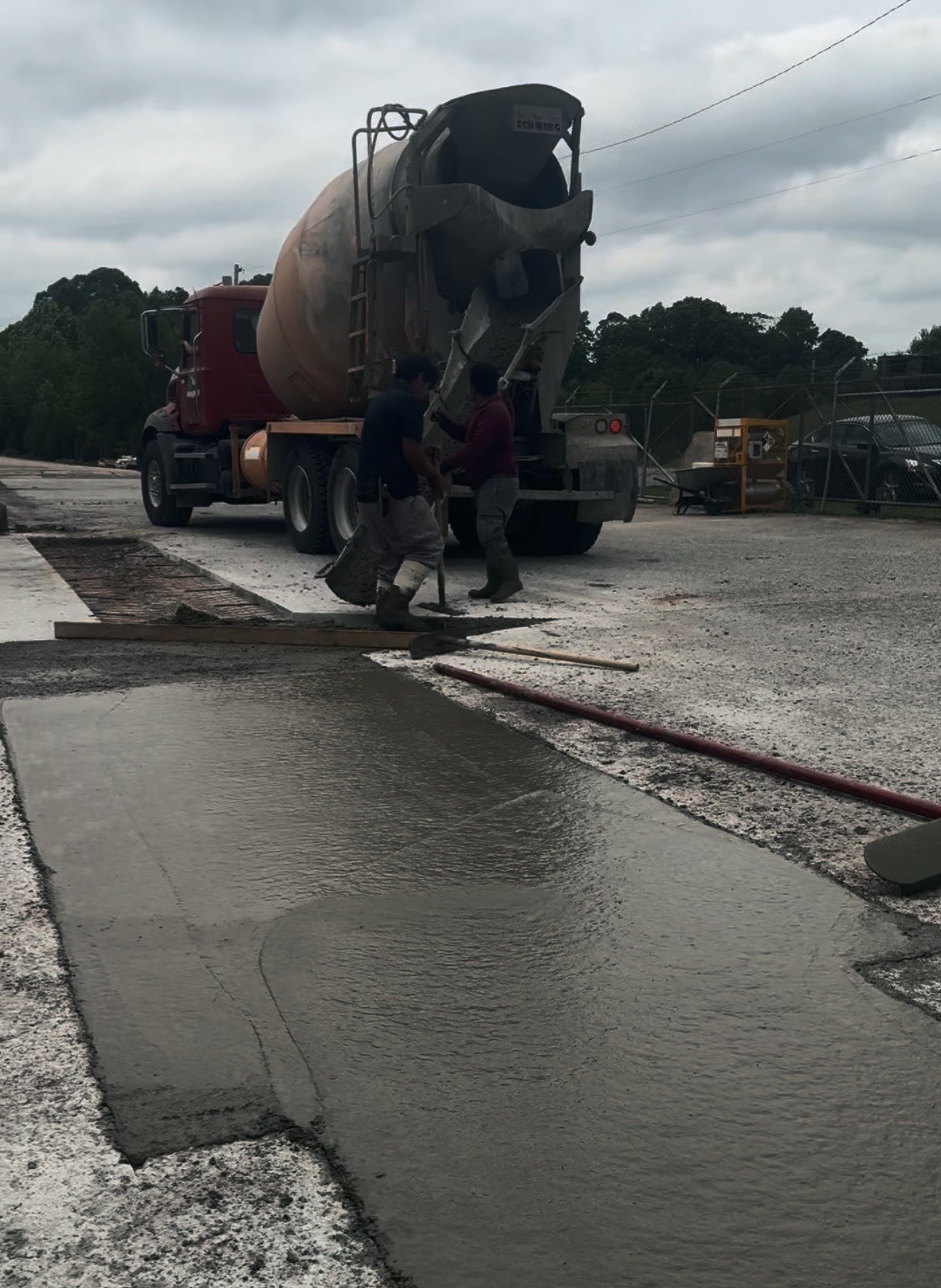
The pump line advances one direction across each slab section while a screed follows behind in real time, keeping the leading edge wet-on-wet. No mid-slab pauses, no stiffened edges left waiting to bond against fresh concrete from the next truck.
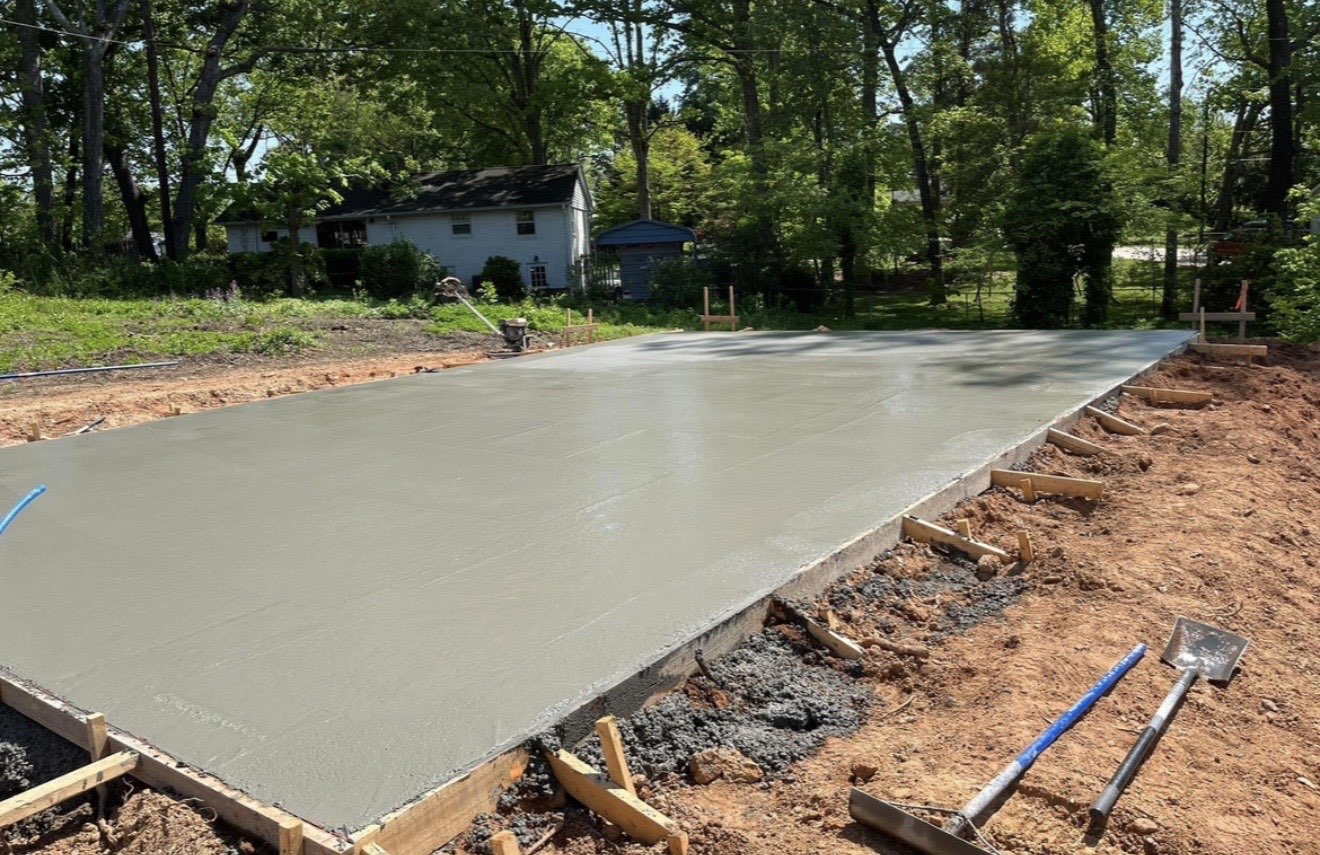
Bull Floating
Immediately behind the screed, the bull-float rides across to press aggregate down and float cement paste to the top. That first surface closure is what decides whether a low-angle Carolina winter sun reveals a flat pour — or a wavy one.
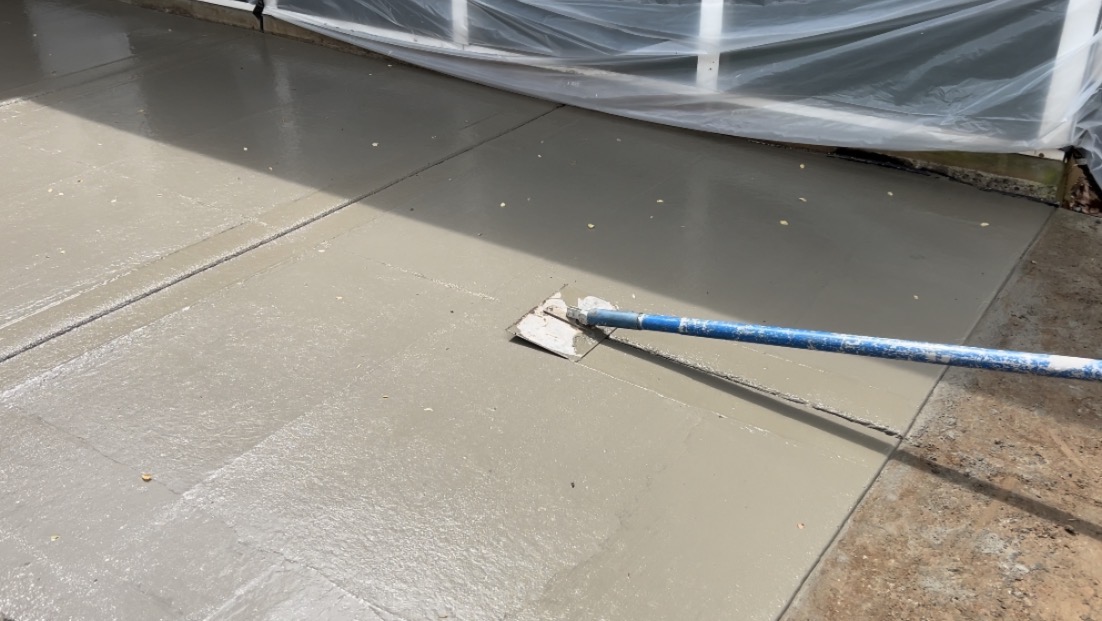
Edging & Jointing
Perimeter edges get hand-tooled round to shed impact loads, and saw-cut control joints go in within a four-to-eight-hour finishing window. Leave it longer over Charlotte clay and random cracks beat you to it. Joint spacing in feet mirrors slab thickness in inches, aligned to columns.
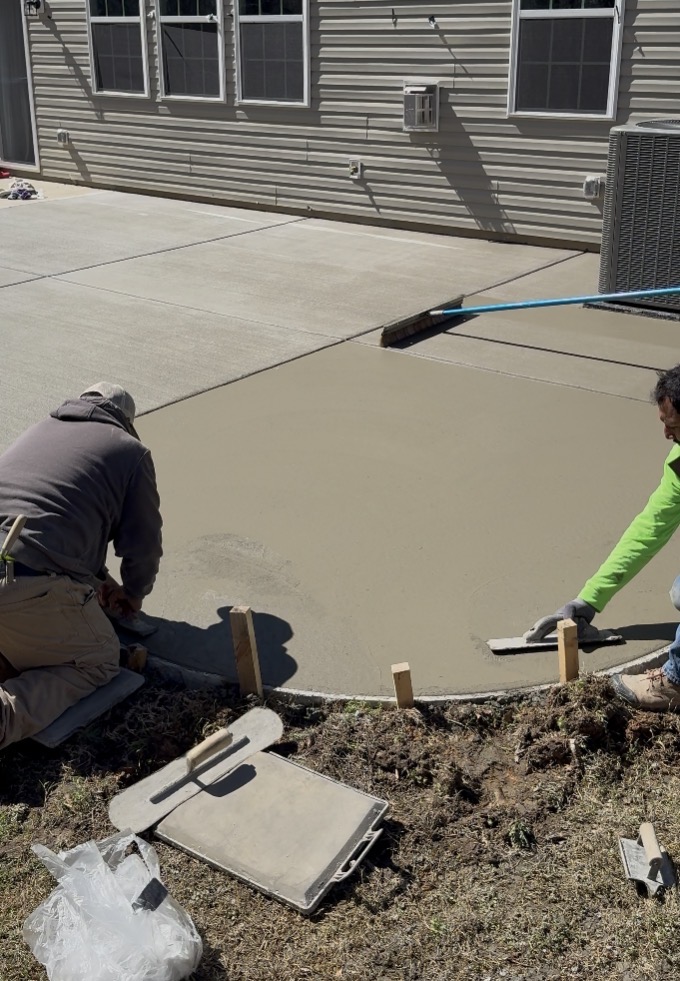
Fresno Finish
A long-handled Fresno makes a second pass to tighten the surface and pull any remaining waves flat. That judgment call — how many passes, when to stop — is exactly what separates a professional finish from a weekend attempt.
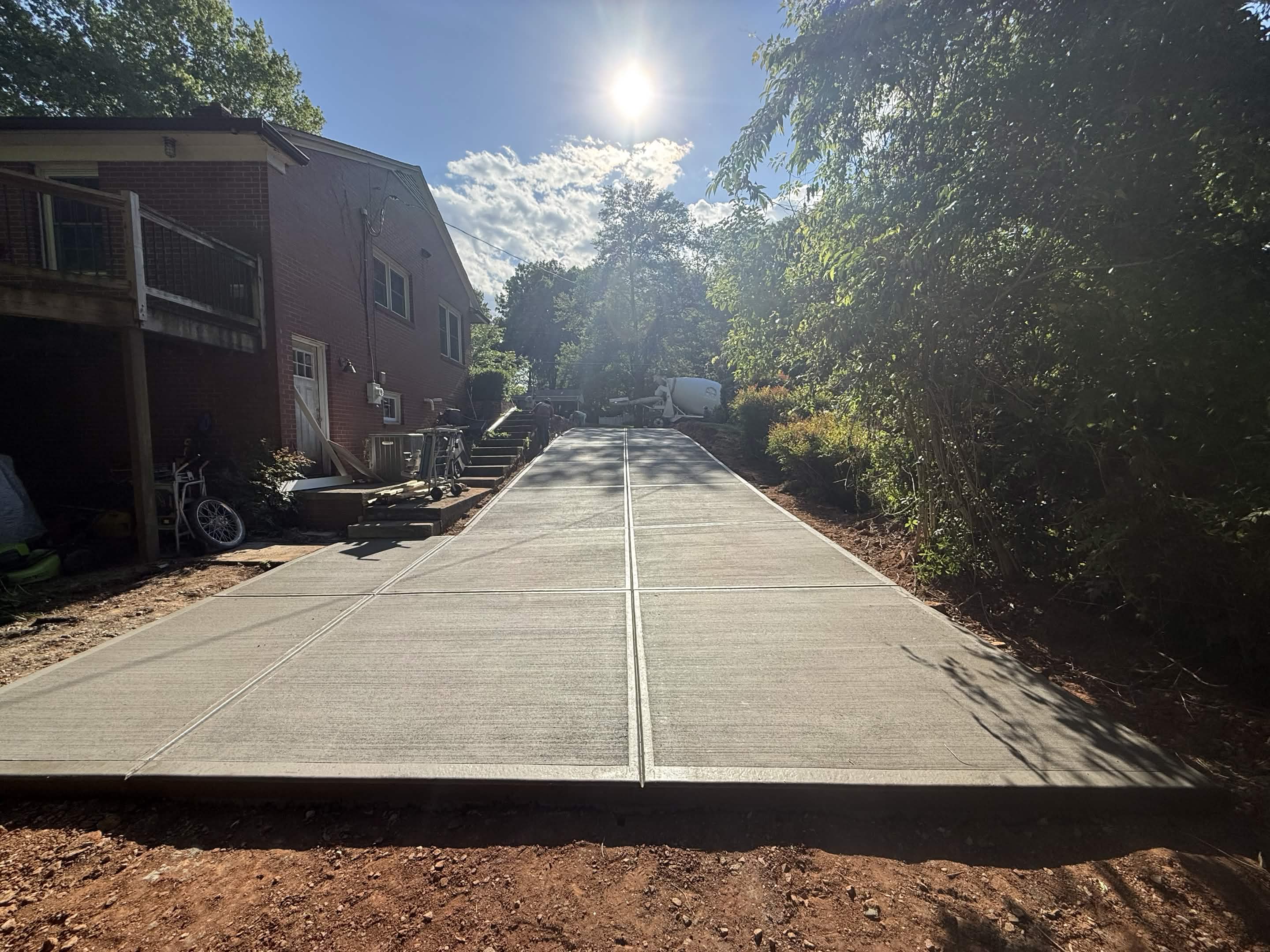
Decorative Detailing
Broom texture drags perpendicular to the direction cars or feet travel, for grip. Stamped patterns get pressed into concrete still holding fingerprint firmness. Exposed aggregate runs a retarder and wash sequence timed to that day's evaporation rate.
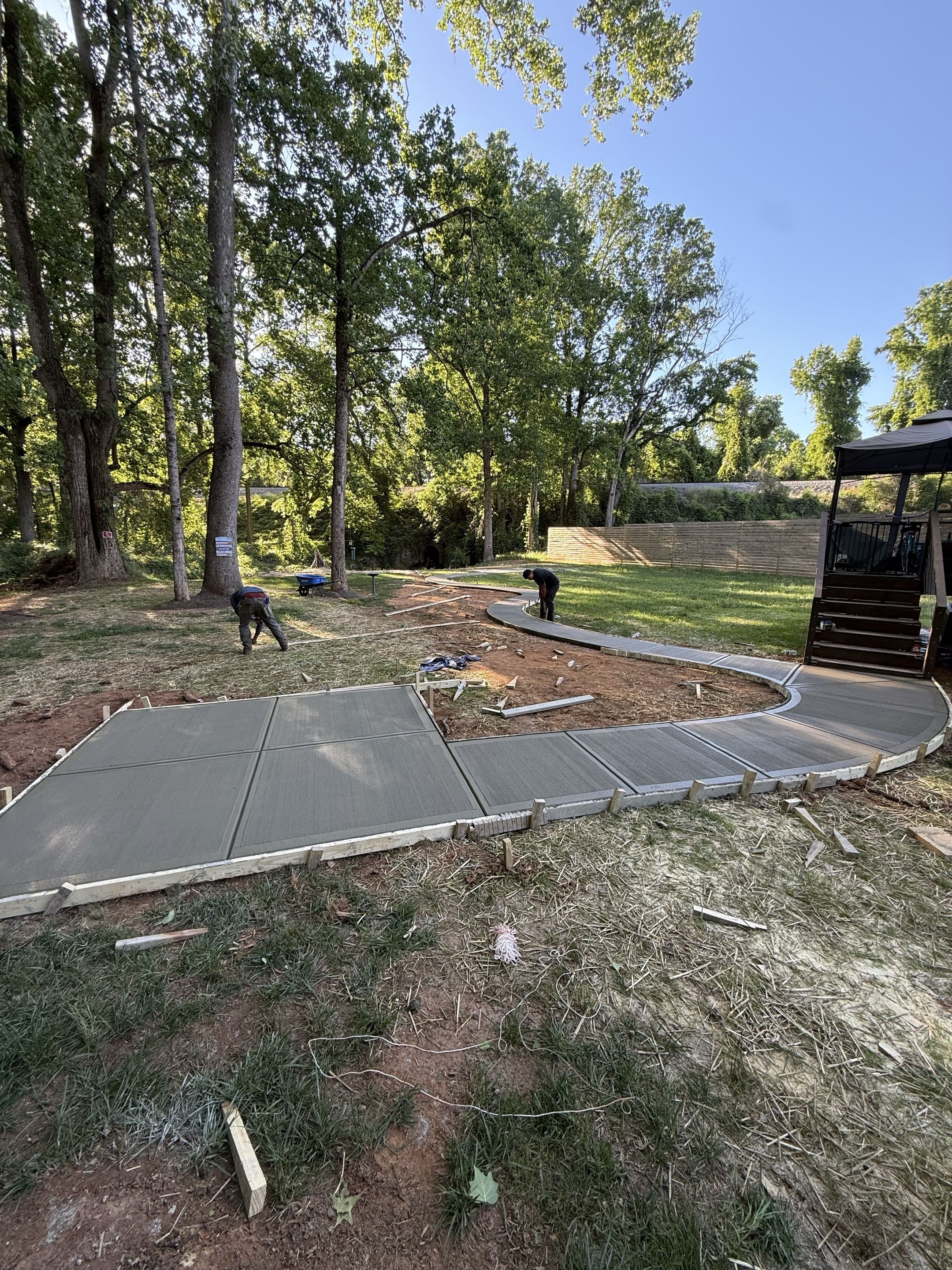
Form Removal
Twenty-four hours is the earliest forms come off — pull sooner and green edges spall, pull later and the stakes fuse to concrete. Flash gets chipped clean, a final chamfer tooled on every exposed edge, then lumber loaded and gone that afternoon.
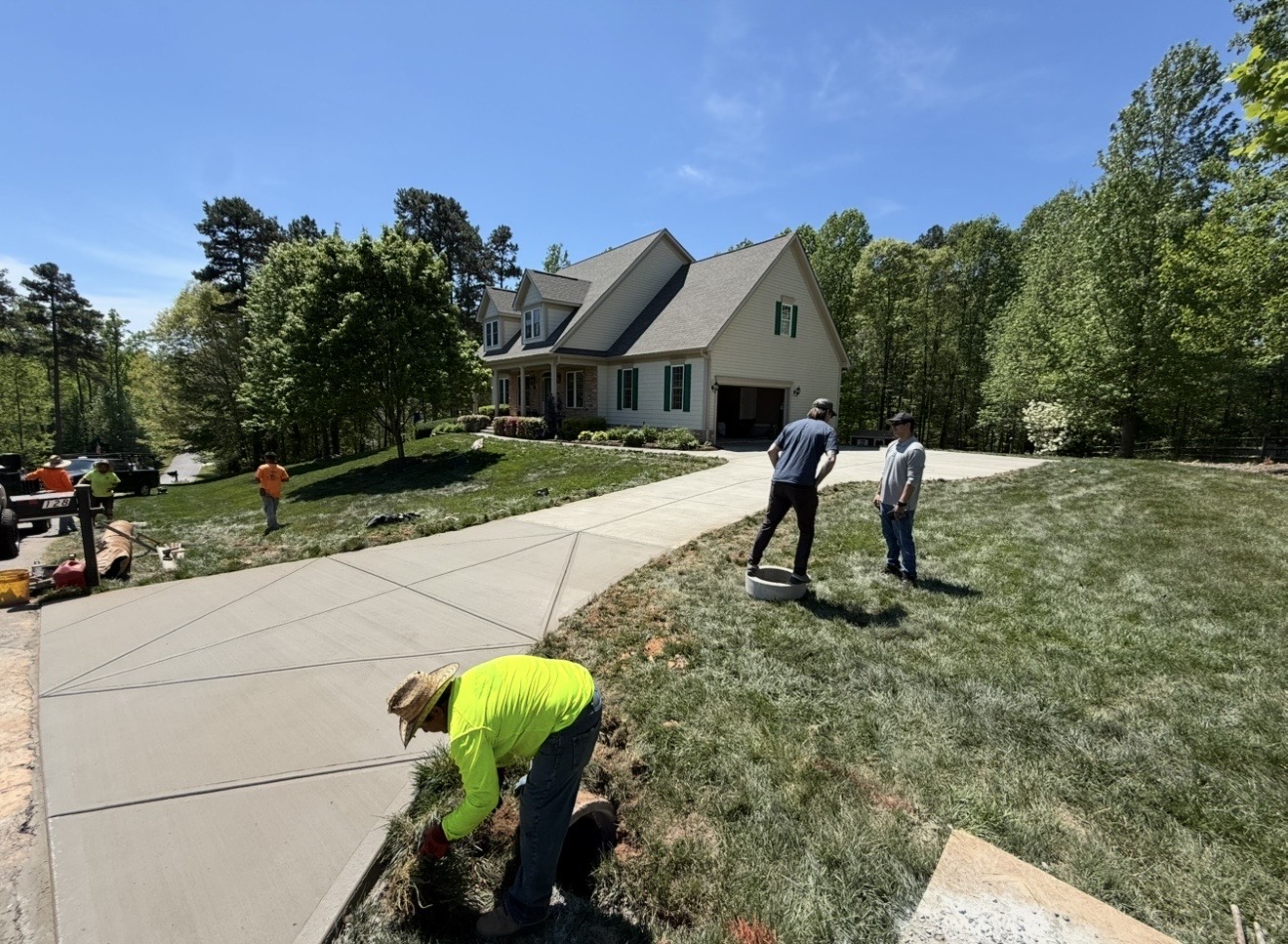
Final Walkthrough
Once the slab is finished, you and the foreman walk it together. Every question — a joint that looks wide, a spot that reads high, a texture line — gets addressed on the spot. Your invoice only hits after you sign off, never before.

Usage Guide
A printed care sheet stays with you: foot traffic at 24 hours, passenger vehicles at 7 days, heavy loads at the full 28-day cure. Also included — a written no-deicing-salt warning for the first winter, and a reseal window for any stamped surface.
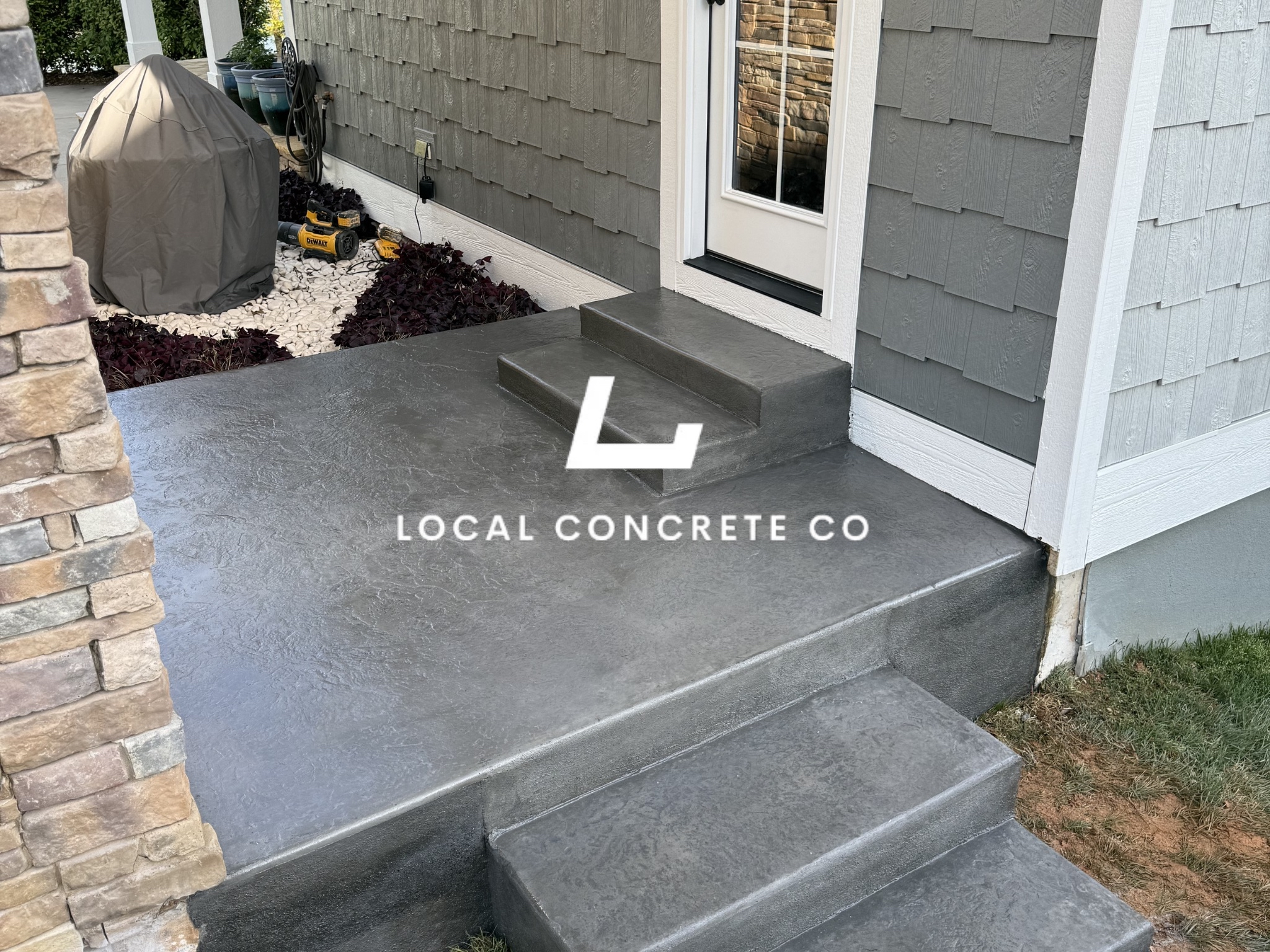
Project Completion
Debris rolls off the truck, your property gets left tidier than we found it, and a written workmanship warranty lands in your email. That sequence — walkthrough signed, site cleared, warranty delivered — is what actually finishes a pour on our books.
Mix Design, Thickness, and Joints on the New Pour
Above-slab, three decisions determine how long the new drive lasts: mix design, thickness, and joint pattern. Nailing all three is what separates a slab still holding at thirty years from one you are replacing again at twelve.
- Mix — 3,500 to 4,000 psi handles a standard residential drive; stepping the psi up is what we do on heavy-load drives or where deicing salt hits the slab regularly
- Every outdoor NC pour goes in air-entrained by default, because the tiny air voids are what let the top surface survive Piedmont freeze-thaw without spalling
- Slab depth — 4 inches minimum for cars, 5 to 6 inches under trailers, RVs, or work trucks, plus a thickened edge everywhere wheels concentrate load
- Steel — wire mesh, rebar mat, or fiber blended into the mix, called out based on span length, expected load, and how the subgrade rates
- Control joints saw-cut inside the 12-to-24-hour window, spaced at roughly 24 to 30 times slab thickness — so a 4-inch pour gets a cut every 8 to 10 feet
- Isolation joints wherever the new slab meets the garage, walk, foundation, or apron, giving seasonal movement a designed place to relieve
- Cure discipline — wet cure or curing compound during the first 3 days makes a bigger strength difference in Charlotte summer heat than most homeowners appreciate
Where a homeowner wants the absolute lowest number and understands the compromise, we quote a dirt-pour with no base and no wire as a legitimate budget-tier line — its own line on the quote so the trade-off is transparent and the comparison against the full spec is honest.
When Replacement Beats Repair on the Math
Repair economics collapse when two or more failure signs pile up on a drive already past the twenty-year mark. Patching one symptom on a slab with three underlying problems just buys a few months on a driveway that is unraveling anyway.
- Web-like map cracking spread across the surface — a sign the base gave out or the original mix was wrong, not a single bad zone
- A collapsing apron combined with settling panels back in the body of the drive
- Several fissures over a quarter-inch across that reopen every time they get filled
- Panels sitting more than half an inch off plane — creating trip hazards, water ponds, or a lip that grabs low bumpers
- Rebar or wire mesh peeking through open surface cracks
- Broad spalling that has stripped the top paste back and exposed aggregate over large sections
- Puddles standing in places that stayed dry ten years ago — the subgrade has moved beneath the slab
- A tree root that has jacked one panel more than an inch up out of plane
With two or three of those on a drive older than 20 years, replacement almost always wins the ten-year math even where the repair number looks kinder today. We put both quotes on paper so the arithmetic is visible.
Why Homeowners Work With Us
Local Concrete Charlotte runs residential and light commercial concrete throughout the Charlotte metro — from Ballantyne and SouthPark through Weddington, Pineville, and Huntersville. Replacements operate under the same standards as new construction because everything below the finish disappears from view after pour day.
- No money changes hands until the drive is poured, finished, and walked with you at completion — deposit-free start to finish
- Free on-site walk-and-quote where demo scope, haul-off, subgrade correction, base depth, thickness, steel, joint plan, and mix all land on paper
- Fully licensed and insured — coverage certificates are available on request before we start breaking concrete
- Straight pricing with no closer-style urgency, no timeshare tactics, no fake expiration on the quote
- Actual jobsite photos of prior tear-out-and-repour work in nearby Charlotte neighborhoods
- Transparent breakdown of what moves the number — square footage, demo difficulty, hauling, how deep the subgrade fix goes, apron work, steel choice, and finish
- One crew from the first saw-cut through the last broom pass
- Budget-tier options (no base, minimum stone, minimum reinforcement) written as their own line item when a homeowner needs the lowest number possible
Still collecting replacement quotes? Ask each contractor four things: what is your base spec, what thickness are you pouring, what joint pattern are you cutting, and how do you cure the slab. Those four answers draw the line between a replacement built to outlast the original and one you are replacing again a dozen years later.
Driveway Replacement
FAQ
The questions Charlotte-metro homeowners actually ask us about driveway replacement — slab thickness, Piedmont clay prep, cure-time realities, deposit terms, and what the difference is between a pour that lasts a decade and one that cracks the first winter.
Get Free QuoteHow do I know if my driveway needs replacement or repair?
On a slab already past twenty years, two or three stacked failure symptoms usually make the replacement quote the honest answer. Extensive spider-webbing, apron settlement, several cracks wider than a quarter-inch that reopen after fill, panels sitting more than half an inch out of plane, exposed rebar, or wide-area spalling each point back to base failure or a bad original mix. Bundle any of those together and patching is really just resetting the clock. We walk the drive with you, quote both paths, and are honest about which repairs genuinely extend service life versus which just delay the pour a season or two.
How long does a full driveway replacement take?
What does subgrade correction actually involve?
What thickness should a replacement driveway be?
Can I upgrade the drive during replacement—wider, longer, or decorative?
Do you require a deposit for driveway replacement?
Ready to price a Charlotte-metro pour?
Walk-and-bid is free, no deposit at booking, and you only pay after you sign off on the finished slab.
Get Free Quote